Signs of Foundation Settlement in New Construction: Early Warning Guide
Table of Contents
- Understanding Foundation Settlement in New Homes
- Early Warning Signs of Foundation Settlement in Newly Built Homes
- Differentiating Normal Settling from Problematic Structural Movement
- Sticking Doors and Windows: When to Be Concerned
- Why Cracks in Drywall and Masonry Appear in a New House
- When to Request a Professional Foundation Inspection
- Foundation Peace of Mind for Your New Home
Understanding Foundation Settlement in New Homes
Foundation settlement is the downward movement of a home’s foundation caused by soil compression beneath the footings. Understanding the signs of foundation settlement in new construction helps homeowners know when to act.
Minor settlement is a normal part of new construction as the soil adjusts to the weight of the structure. According to the National Association of Home Builders, acceptable settlement is typically limited to minimal, uniform movement that does not compromise structural integrity. The National Home Builders Association provides industry guidance on acceptable settlement thresholds for new homes. In the Denver area, expansive clay soils and moisture fluctuations can accelerate settlement, making professional evaluation especially important.
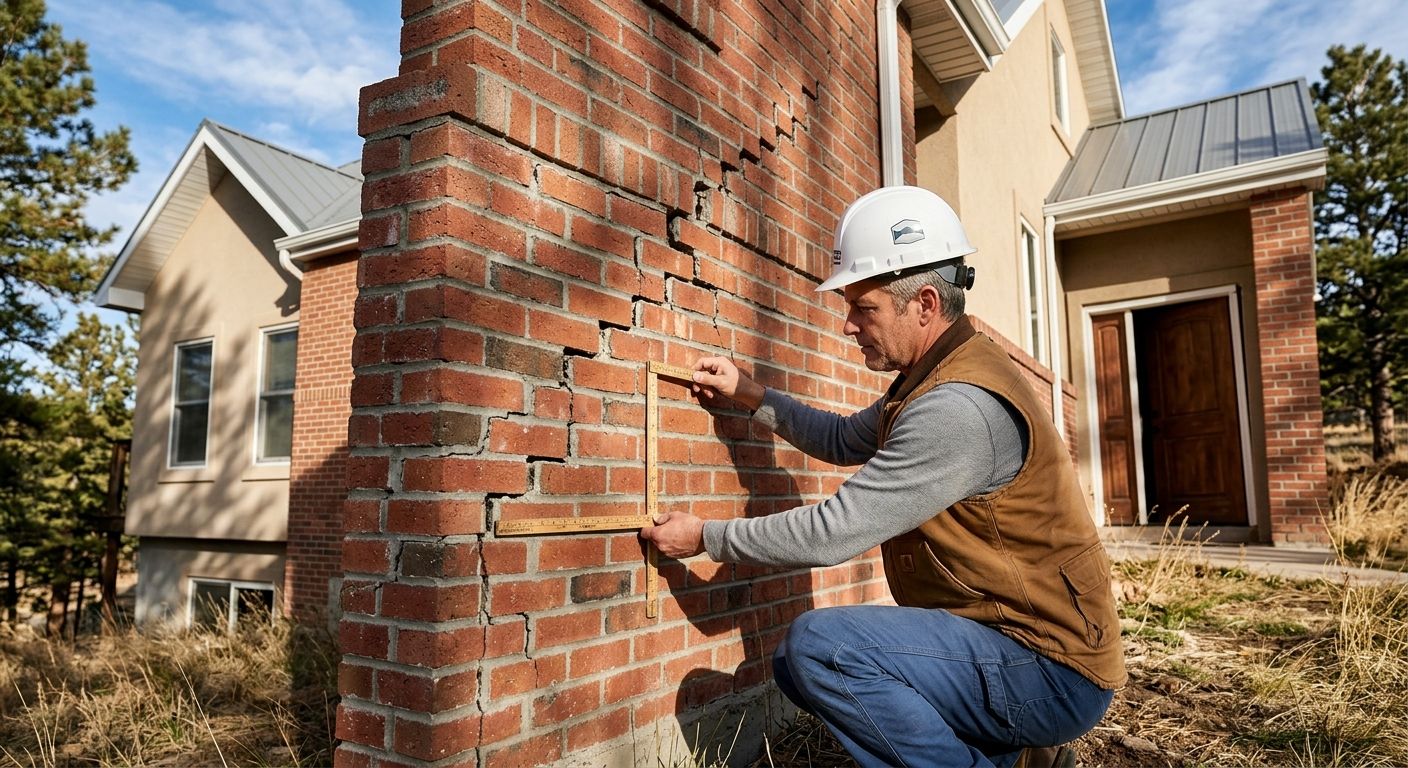
Excessive or differential settlement can lead to structural issues. Among the most common signs of foundation settlement in new construction are stair-step cracks in masonry walls. As we at ACN Construction have observed, these patterns often indicate movement that requires attention. Only a qualified structural engineer or foundation specialist can distinguish normal adjustment from problematic settlement.
In the next section, we’ll explore specific signs that your new home may be experiencing foundation settlement.
Early Warning Signs of Foundation Settlement in Newly Built Homes
Recognizing the early signs of foundation settlement in new construction is crucial for protecting your investment. In Centennial’s expansive clay soils, newly built homes can exhibit settlement indicators that, if caught early, can prevent costly structural repairs later. At ACN Construction, we help homeowners distinguish between normal settling and signs that need professional evaluation.
One of the most common indicators is the appearance of stair-step cracks in brick or block veneer. These cracks follow mortar joints in a zigzag pattern, often signaling differential settlement, where sections of the foundation sink at uneven rates. When stair-step cracks appear near doors and windows, they can point to concentrated stress around these structural openings. Our FAQ notes that cracks exceeding 1/8 inch in width deserve professional assessment, and any crack wider than 1/4 inch is considered structurally significant.
Beyond cracks, other settlement warning signs in new home foundation cracks include:
- Uneven or sloping floors that create a noticeable dip or pitch.
- Doors or windows that stick, bind, or fail to close properly without adjustment.
- Gaps forming between walls and ceilings or floors, and separation of trim or baseboards.
These issues can develop gradually, so we recommend monitoring any changes over time. Sudden worsening or the appearance of multiple signs may indicate ongoing movement. While some settlement is normal in new construction, progressive cracking or shifting calls for a licensed contractor’s inspection.
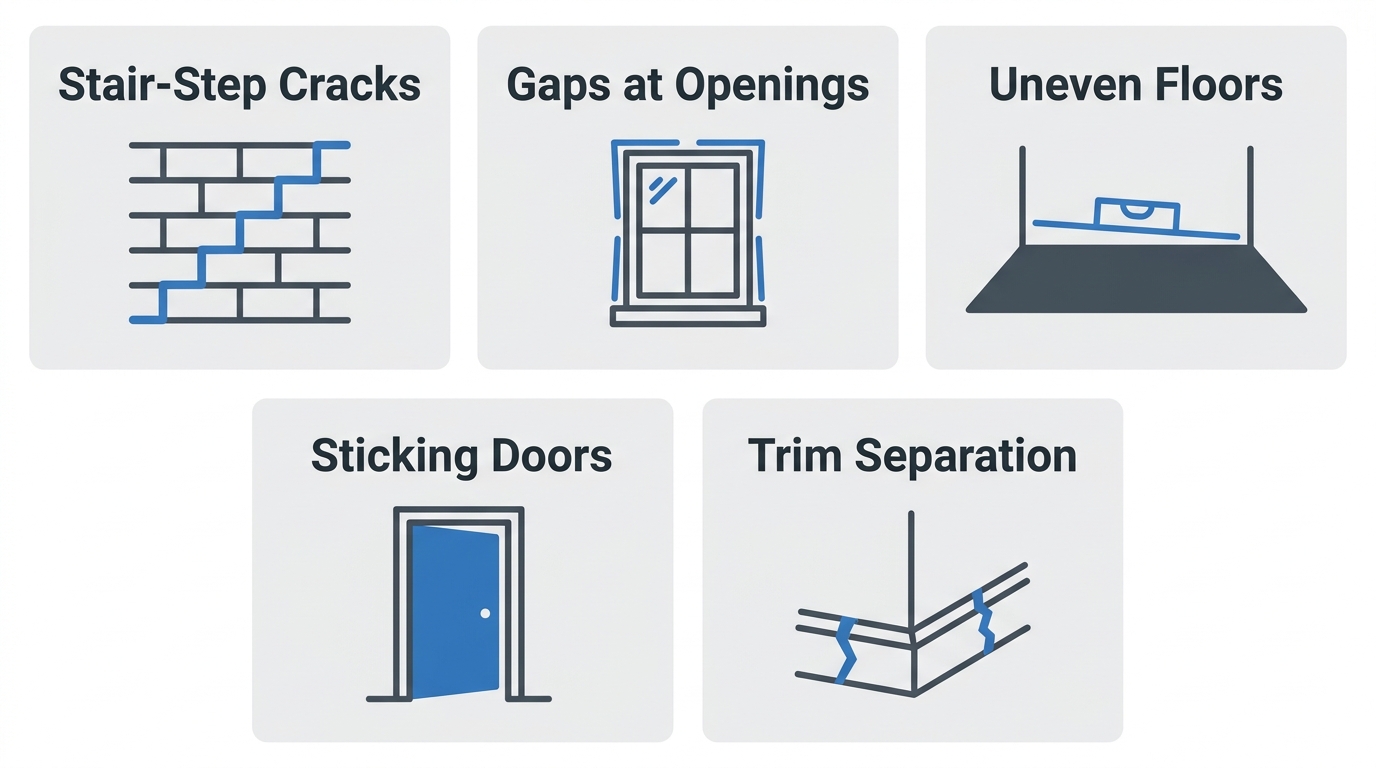
Five early warning signs of foundation settlement in new homes
For Centennial homeowners, our team at ACN Construction can evaluate these signs and recommend appropriate solutions. In some cases, helical pier foundations can stabilize the structure and prevent further deterioration, but every situation is unique and requires a thorough site assessment. We recommend consulting a licensed contractor for a definitive evaluation; you can verify credentials through the Colorado Department of Regulatory Agencies (DORA). Identifying these early signs is the first step; understanding what causes foundation settlement in new homes will help determine the best course of action.
Differentiating Normal Settling from Problematic Structural Movement
Recognizing the signs of foundation settlement in new construction helps homeowners in Centennial, CO differentiate between expected settling in a new home and structural issues that could require professional repair. While some movement is normal during the first year, certain warning signals indicate the need for a closer look.
In our experience, normal settling typically produces hairline cracks less than 1/8 inch wide. These cracks usually run vertically or diagonally and do not widen noticeably over time. They often appear in drywall or foundation walls within the first year of construction and seldom cause secondary issues like sticking doors or uneven floors. In Centennial, CO, where expansive clay soils cause minor seasonal movement, such hairline cracks are common and generally harmless. We recommend documenting any new cracks with photos and monitoring them over a few months to be sure they aren’t growing. As long as they remain stable and no secondary signs develop, there’s little reason for concern.
While some movement is expected in new construction, it is critical to distinguish it from problematic structural movement.
When more serious signs of foundation settlement in new construction appear—such as stair-step cracks that follow mortar joints—the situation demands professional evaluation. These cracks often exceed 1/4 inch in width or actively widen over time. Horizontal cracks, sticking doors and windows, and floors that feel uneven are additional red flags. When these symptoms accompany cracking, the underlying movement is likely structural rather than cosmetic. In Centennial, CO, where expansive clay soils are common, slight settling is normal, but shifting differentials of more than 1 inch require a specialist’s analysis. We recommend monitoring any visible cracks for at least two seasons (winter and summer) to track progression; if you see enlargement, it’s time to call us.
If your cracks fall into the problematic category, our team can evaluate and recommend the right repair solution. We’ll assess the extent of movement, identify the underlying soil conditions, and recommend a tailored repair plan—without any obligation. Early detection of structural movement can prevent much larger, costlier damage, so don’t wait. To be certain, our team can inspect your foundation and provide a custom quote. Contact our team today to schedule a site evaluation and get peace of mind.
Sticking Doors and Windows: When to Be Concerned
When you notice sticking doors and windows in a newly built home, it’s natural to ask whether you’re seeing early signs of foundation settlement in new construction. Some sticking can be a normal part of a home’s initial settling, especially during the first 12 months in Colorado’s variable climate.
A door that sticks during a wet spring only to swing freely again by late summer is often just the result of seasonal expansion and contraction. As a local builder, we follow the Colorado Association of Home Builders’ guidance: minor sticking that can be corrected by planing a door or adjusting a strike plate is typically within normal tolerances. By contrast, sticking that becomes permanent or progressively worse over several months may indicate differential foundation movement, especially if the gaps around the door or window frame are changing, such as widening at the top and narrowing at the bottom.
Sticking accompanied by stair-step cracks that radiate from the corners of doors and windows is a stronger signal. As we explain in our own FAQ on stair-step cracks near doors and windows, one of the early signs of foundation settlement in new construction is the appearance of these diagonal cracks, which often track through brick or block rather than just mortar joints. When you see this combination, we recommend documenting the location, when you first noticed it, and whether the sticking is interfering with normal operation. If the gaps appear to be shifting, that suggests uneven movement and should be evaluated by a professional.
Given Colorado’s expansive clay soils and harsh freeze-thaw cycles, we know that homes in Centennial and the Denver area can experience more pronounced movement than those in other regions. The Colorado home builders association provides guidance on acceptable settlement thresholds and can be a helpful resource for homeowners trying to gauge whether what they’re seeing falls within typical construction norms. Still, only a licensed contractor who evaluates the site firsthand can determine whether the movement is harmless or requires repair.
If sticking doors persist or worsen, it may be time to have a foundation expert take a look. We’re available to discuss your concerns and, if needed, arrange an inspection; just reach out to our team.
Why Cracks in Drywall and Masonry Appear in a New House
Even in newly built homes, it is common to notice cracks in drywall and masonry within the first year. Understanding the signs of foundation settlement in new construction helps homeowners distinguish between normal cosmetic adjustments and patterns that may warrant a closer look. Most cracks are simply the result of materials drying, expanding, and contracting as the house acclimates to its environment, and they rarely signal a structural problem.
Three main mechanisms produce the majority of small cracks. Drying shrinkage is the most frequent culprit; lumber and drywall compound lose moisture as they cure, causing hairline separations at seams, corners, and around door frames. Thermal expansion and contraction then adds seasonal micro-movement, because framing, drywall, and masonry all expand with summer heat and shrink in winter cold, gently pulling at joints. A third factor is minor foundation settlement, which often occurs when the soil beneath a new home compresses slightly under its weight. In most cases these movements are gradual and result only in hairline fissures or nail pops that are cosmetic and easily filled during final touch-ups.
Some cracking patterns, however, merit closer attention. Stair-step cracks in concrete block or brick veneer—diagonal fractures that follow the mortar joints in a zigzag pattern—can be a telltale indicator of differential foundation settlement. ACN Construction describes these as stress-concentrated breaks that arise when sections of the foundation settle at uneven rates, often due to expansive clay soils common in the Denver-Front Range area. Recognizing the signs of foundation settlement in new construction, such as stair-step cracks that exceed 1/4 inch in width, sticking door frames, or floors that slope perceptibly, helps homeowners determine when to move beyond monitoring. While our design-build process includes proactive site preparation and grading to minimize excessive settlement, no construction is entirely immune to natural ground movement, and every new home goes through a settling period.
If you notice cracks that concern you, our team can provide a thorough assessment. Let us help you get your project started by scheduling a consultation. We will evaluate the extent of the cracking, measure for movement, and explain whether routine maintenance or deeper stabilization is appropriate. Homeowners should always consult a licensed contractor for definitive advice, as each property’s soil conditions and construction details are unique.
When to Request a Professional Foundation Inspection
As a homeowner in Centennial, Colorado, understanding the signs of foundation settlement in new construction is essential for preserving your property’s structural integrity. While some minor settling—such as hairline cracks—is normal within the first two to three years, certain warning signs demand immediate professional attention. Our region’s expansive clay soils, prone to dramatic movement during wet-dry cycles, make periodic inspections a wise precaution. ACN Construction encourages homeowners to stay vigilant because early intervention can prevent costly, extensive repairs.
Visible indicators often begin with horizontal or stair-step cracks in foundation walls, whether on interior drywall or exterior masonry. Gaps around window frames and doors, sticking or misaligned doors and windows, suggest the foundation has shifted. Inside, sloping or uneven floors and a visible separation between the foundation and the structure above are red flags. Moisture intrusion in basements or crawlspaces can aggravate instability, particularly given Centennial’s seasonal moisture changes. While hairline cracks are normal within the first two to three years of a new build, the signs of foundation settlement in new construction that include cracks wider than 1/8 inch or progressive widening call for immediate professional assessment. According to ACN Construction’s foundation restoration guide, cracks that reach 1/4 inch often point to structural problems requiring evaluation; this principle applies regardless of a home’s age.
Beyond visible cracks, certain scenarios warrant an inspection even if no damage is apparent. After an earthquake, heavy rainfall or flooding, nearby excavation, or prolonged drought, soil stability can shift rapidly. If you are planning a major renovation that adds significant structural load, like a second-story addition or a large kitchen remodel, evaluating your foundation beforehand helps ensure it can support the new weight. ACN Construction’s design-build approach provides single-point accountability; our team can determine whether steel push piers or helical piers are the most suitable remediation method based on your home’s specific soil conditions and structural needs, as outlined in our pier system comparison guide. This integrated process simplifies decision-making and reduces the risk of mismatched solutions.
If you notice any of these signs in your Centennial home, don’t wait for further deterioration. Early detection preserves your property’s integrity and avoids escalated repair costs. Let us help you get your project started. Contact ACN Construction today to schedule a professional foundation inspection and receive a tailored assessment of your home’s condition.
Foundation Peace of Mind for Your New Home
Because the foundation supports everything above it, we apply the same design-build rigor here — starting with site-specific soil analysis and methods recommended by the National Association of Home Builders. Recognizing even subtle signs of foundation settlement in new construction makes clear why this upfront investment is essential.
We build to NAHB national standards while integrating Colorado-specific expertise on expansive soils, frost depth, and Front Range codes — guidance that aligns with recommendations from the Colorado Association of Home Builders. Our design-build oversight provides single-point accountability from soil preparation through pour and cure, eliminating communication gaps that can lead to settlement risks. This coordination ensures that soil testing, drainage, and curing all follow a single, well-documented plan. We also account for local building codes and permit requirements that vary across the Front Range.
While no foundation is entirely immune to movement, our rigorous process significantly reduces settlement concerns. Request a Quote to discuss your Centennial-area foundation needs — let us help you get your project started.
Resources