Best Kitchen Window Styles for 2026: A Complete Buyer’s Guide
Table of Contents
Best Kitchen Window Styles for Your Kitchen
Choosing the best kitchen window styles for your kitchen shapes how natural light, airflow, and daily workflow unfold in the space. Window selection goes beyond aesthetics—it directly influences how you use and enjoy the room. In Centennial, where south-facing windows capture steady daylight year-round, strategic placement becomes especially valuable. Strategic window placement can meaningfully reduce the need for artificial lighting, making it a practical choice for homeowners who want to brighten their kitchen naturally. Our team helps homeowners weigh style against function, ensuring the windows you choose align with how you cook, gather, and live in the kitchen. Let us help you get your project started.
Key Takeaways
- Casement windows are one of the best kitchen window styles for ventilation as their entire sash can be swung outwards, opening up the largest possible hole to let in fresh air from outside.
- Double-hung windows are ideal for homeowners who want to fine-tune their airflow without losing any natural light.
- While double-hung windows excel at airflow, picture windows are the clear winner when your priority is unobstructed light and sweeping views.
- Sliding windows work well in wide kitchen openings as their horizontally sashed design moves along the frame allowing for wider spans without having to use oversize individual sash sizes.
- Awning windows open from the top and swing out, which creates a built-in awning over the opening allowing fresh air to come in even if it is raining or snowing.
1. Casement Windows for Maximum Ventilation
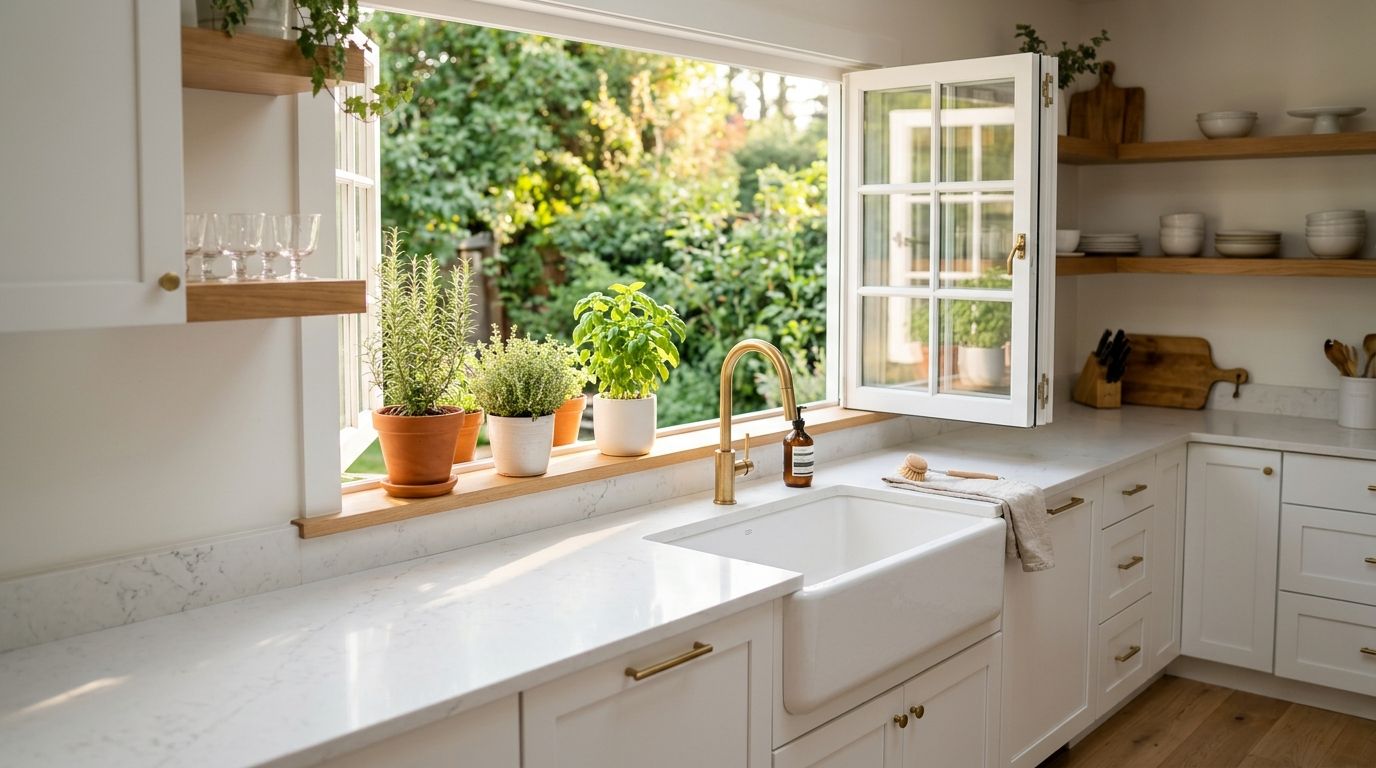
Casement windows are one of the best kitchen window styles for ventilation as their entire sash can be swung outwards, opening up the largest possible hole to let in fresh air from outside.
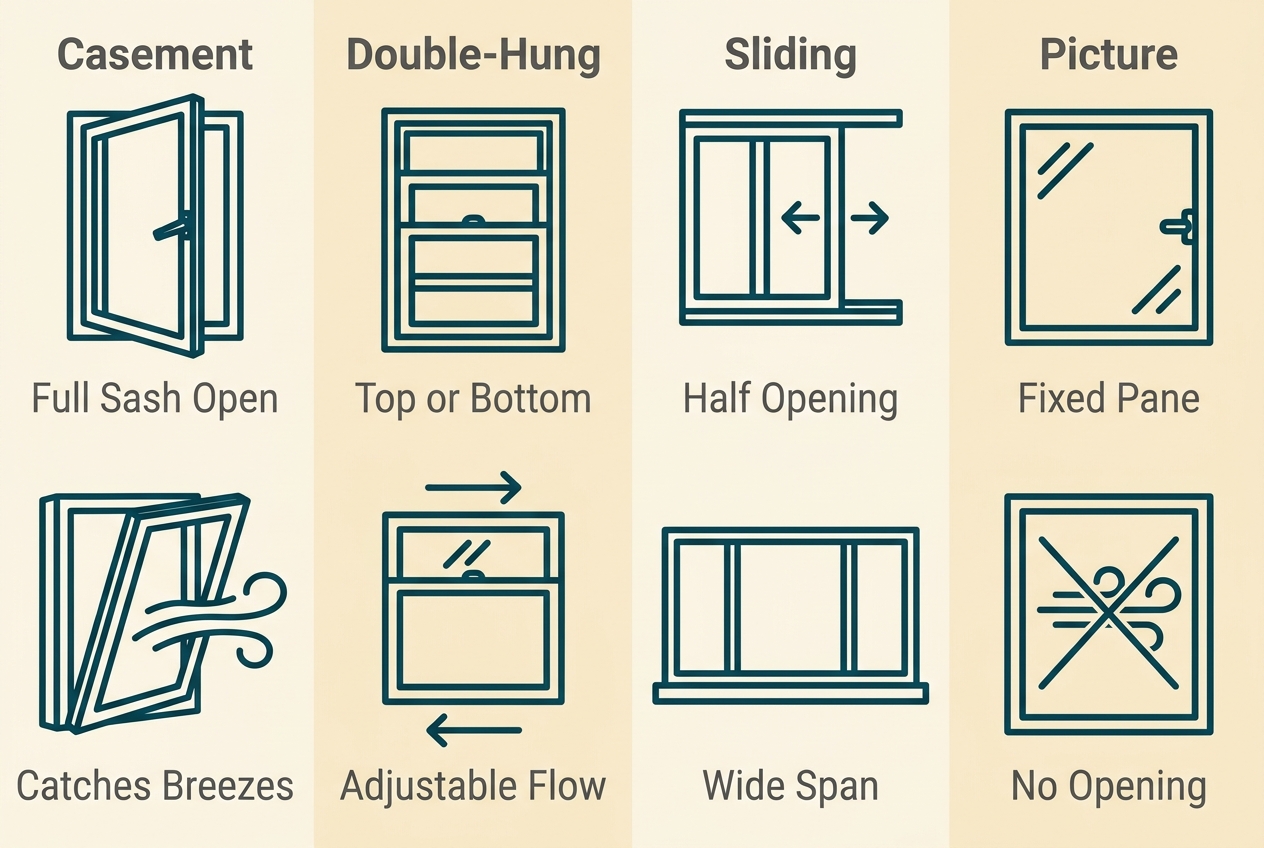
| Window Style | Typical Ventilation Opening | Cooking Odor Removal Effectiveness | Best Kitchen Placement |
|---|---|---|---|
| Casement | Entire sash cranks open | Excellent for odor removal | Above sink or behind cooktop |
| Double-hung | Upper and lower sashes slide | Moderate airflow | Above sink or on walls |
| Sliding | Half the opening slides open | Limited airflow | Along walls |
| Picture | Fixed, no opening | None | Not recommended for ventilation |
A casement’s outward-opening sash will pull in passing breezes and direct them through your kitchen, making it perfect for clearing steam and cooking odors. We suggest locating casements above the sink or behind the cooktop so air can exit directly.
2. Double-Hung Windows for Flexible Airflow
Double-hung windows are ideal for homeowners who want to fine-tune their airflow without losing any natural light. Unlike casement windows, which swing outwards, double-hung units have two vertically sliding sashes that you can open up from the top, the bottom, or even both to get the airflow exactly where you need it. That makes them some of the best kitchen window styles for striking the right balance between fresh air and daylight in Centennial homes.
A dual-sash configuration allows you to choose how the airflow should be used. Vent heat up high through the top sash while pulling in cool air through the bottom sash in rooms where temperature and air quality matter most. You can also control the size of opening to deal with unwanted draft or noise.
For optimal daylighting in Centennial’s climate, position double-hung windows to capture south-facing light while using low-E glazing to filter infrared heat and block 95% of UV rays.
3. Picture Windows for Light and Views
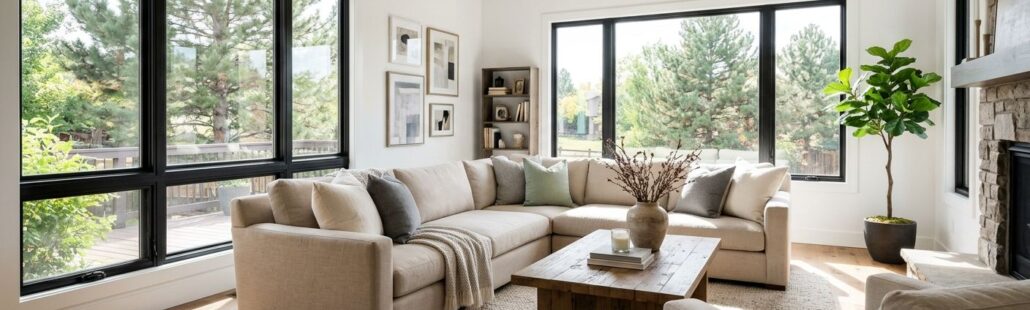
While double-hung windows excel at airflow, picture windows are the clear winner when your priority is unobstructed light and sweeping views. In Centennial homes, we recommend placing these large fixed units on south-facing walls to capture steady daylight year-round, especially in kitchens and living areas where natural illumination matters most.
In terms of Colorado’s climate, using triple-pane glazing is best to keep the house warm as much as possible given the wide windows. In conjunction with Low-E coating, this glazing helps block approximately 95% of harsh UV rays while still allowing for proper thermals – essential in ensuring things such as your furniture, floors, or food prep areas are protected from sun damage. Correct placement and modern glazings can also lower your home’s dependency on man-made light by 25-30% and make picture windows a cost-effective design addition in Centennial.
Being that picture windows can’t be operated, their location and orientation must be planned out during the design process. We blend them in with operable windows from other sections in the group to give you balanced light, views, and ventilation without breaking up the glass plane that defines this look.
4. Garden Windows Over the Sink
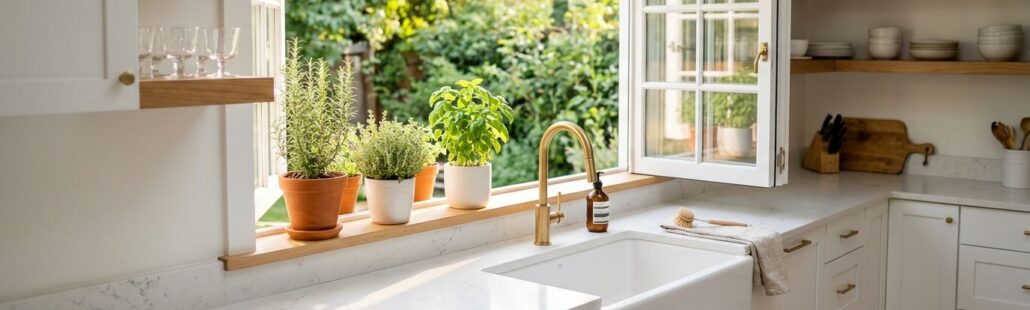
A garden window is a projection above the sink that will allow you to add extra light into the space, as well as creating a small shelf where you can keep your herbs or little potted plants. When designing Centennial homes, we’ll suggest this type if our clients want to add some brightness to the kitchen and have a touch of greenery as well.
This window choice works well with the sink wall: the projection adds light where it’s needed most, while the built in shelf serves as a sunny spot for herbs or decorative plants. On the other hand, that projection does reduce countertop or cabinet depth so homeowners will want to measure carefully against their existing layout before they decide.
When talking about glazing, we recommend asking about Low-E coatings that filter out 95% of UV rays yet keep thermal comfort. Orientation and glazing types can have an impact on overall daylight as well, so you’ll want to review those with your contractor for the specific conditions in your home. For openings that require sliding windows, the choice comes down to the sliding style.
5. Sliding Windows for Wide Openings
Sliding windows work well in wide kitchen openings as their horizontally sashed design moves along the frame allowing for wider spans without having to use oversize individual sash sizes. This means you can have a larger view, but keep the frame within normal size constraints.
With their larger glass area, these also support daylighting strategies that reduce artificial lighting use by 25-30%, when used with proper placement and new glazing. In Centennial’s climate, Low-E coatings block 95% of UV rays but still let through much of visible light. For the cold Colorado winters, triple-pane glazing minimizes thermal heat loss across large window expanses, balancing expansive views, smooth operation, and energy efficiency in local kitchens.
6. Awning Windows for All-Weather Airflow
Awning windows open from the top and swing out, which creates a built-in awning over the opening allowing fresh air to come in even if it is raining or snowing. For Centennial residents, where seasons change rapidly and you want airflow but don’t want to sacrifice comfort, awning windows provide a great solution.
We recommend placing them high on walls, especially above kitchen counters or sinks, where their compact design pairs naturally with larger fixed panes to balance daylight and airflow. In bathrooms or basements, their elevated placement enhances privacy while maintaining ventilation, making them a versatile fit for homes seeking both function and privacy.
For Colorado’s climate, we install triple-pane glazing with Low-E coatings that block 95% of UV radiation and reduce thermal heat loss. In addition to placing windows in the right locations, updating glazing can reduce our dependence on artificial lighting by 25-30%, aligning with our philosophy of wellness through sustainable, energy-efficient living.
7. Bay and Bow Windows for Added Space
Awning windows are great for ventilation, but some homeowners in Centennial, CO want a window that will offer interior space and a lot of daylight too. Bay windows consist of three angled panels that extend out from the wall and create a small ledge or seating nook, while bow windows use four or more panels arranged in a gentle curve to form a soft, rounded shape. Both bay and bow windows add floor space and more glass area, which introduces more natural light throughout the day.
South exposure works well on Centennial because our south facing windows receive a steadier stream of sunlight throughout the year, which is why they suit living rooms, great rooms, and kitchen eating areas. Think about the exterior of your home before you buy, including overhangs, headers, and additional support required, because we can help you figure out if they will be necessary during the design process. We can assist in determining feasibility before your purchase to prevent any issues with installation.
Bay windows are often one of the best kitchen window styles if you’d like to add a seating nook but don’t want to lose any lighting.
Skylights and Light Tubes Overhead
Horizontal skylights let in approximately five times more light than standard vertical windows of the same size, making them a powerful daylighting option for homes located in Centennial. Light tubes take this idea even further, directing daylight from roof-mounted lenses into areas such as hallways or closets that don’t have exterior walls.
For Colorado, triple-pane glazing over head units is ideal to keep some heat in during the winter while still controlling UV/IR. Low-E coated on those units will block up to 95% of UV rays while allowing all the visible light, which will save around 25-30% of artificial lighting when used with daylighting strategies. That way you stay warm, comfortable and energy efficient in your Centennial home.
Overhead daylighting needs careful structural and energy considerations, which our installers evaluate during a professional installation to ensure code compliance and long-term performance.
Permits and Installation Considerations in Centennial
If you are planning a kitchen window project in Centennial, a permit is needed if you are changing the size of the opening. Replacing windows inside the current opening will generally not require a permit. However, if you increase or modify the opening, you will need one. If you are changing the size, you should allow around two weeks for the permit to be approved and the typical cost is between $90 – $360 depending on the job.
Permit validity is 180 days, and there are two main inspections required: framing/rough opening and final. Common reasons for failure include undersized headers and missing safety glazing, so paying attention to code can help avoid problems. Contractors need valid city licenses in order to perform permitted work and virtual inspections are available for some projects.
We take care of the permits and inspections for your kitchen remodeling project to make sure your project stays compliant without added stress to you.
Frequently Asked Questions
Are casement windows better than sliding windows for kitchen spaces?
Casement windows are better for ventilation because their entire sash cranks open, creating the largest possible opening to let in fresh air. Sliding windows only open half their area, limiting airflow. Casements also direct breezes through the kitchen, making them ideal for removing cooking odors.
How do I choose the best kitchen window style for my specific kitchen layout?
Choose casement windows for maximum ventilation, double-hung for adjustable airflow, picture windows for unobstructed light and views, or sliding windows for wide openings. Consider placement above the sink or behind the cooktop to optimize airflow and daylight in your kitchen layout.
What are the benefits of using picture windows in a kitchen design?
Picture windows provide unobstructed light and sweeping views, making them ideal for capturing steady daylight year-round in Centennial kitchens. They reduce reliance on artificial lighting by 25-30% when paired with proper glazing and orientation.
What is the Best Window Style to Install over a Kitchen Sink?
Garden windows are the best style to install over a kitchen sink because they project outward to add extra light and create a small shelf for herbs or plants. Their design maximizes brightness where it is needed most in the kitchen.
Which Kitchen Window Styles Offer the Best Ventilation for Removing Cooking Odors?
Casement windows offer the best ventilation for removing cooking odors because their entire sash cranks open, creating the largest possible opening to pull in fresh air and push out steam and odors efficiently. Awning windows also provide strong airflow even in rain or snow.
Plan Your Kitchen Window Project with Confidence
Choosing the best kitchen window styles in Centennial allows you to enjoy a great deal of natural light while meeting the requirements for local permits and energy efficiency goals. With modern glazing and proper positioning, windows can help reduce your need for artificial lighting by approximately 25-30% and low-E coatings will block about 95% of UV radiation while filtering the infrared heat. In Colorado, triple-pane glazing is the best choice for keeping things comfortable and well insulated.
In Centennial, same-size window replacements generally don’t need permits, but if you’re changing the size of the opening then you will need to get a permit, and the approval process will take about two weeks. Framing/rough opening and final inspections are necessary and common problems include undersized headers or missing safety glazing.
Contact our team in Centennial for a consultation and get a customized quote based on the unique requirements of your home.
Start Your Kitchen Window Project
You’ve now compared the top window styles for kitchens, from casements that maximize ventilation to skylights that bring daylight in from above. Whether you prioritize airflow, unobstructed views, or added space with a bay nook, the right style depends on your layout, sink placement, and how you cook. Modern glazing choices like low-E coatings and triple-pane glass can also cut reliance on artificial lighting by 25-30% in Colorado homes. Keep in mind that any change to your window opening size will involve permits and inspections in Centennial, Colorado. Our design-build team handles everything from style selection and glazing to permits and installation. Reach out for a personalized quote based on your kitchen’s specific needs. Let us help you get your project started.