Model Low Energy and Carbon Code Mlecc Colorado: Essential Guide
Table of Contents
- Understanding the MLECC in Colorado
- MLECC Compliance Across Colorado Jurisdictions
- Design-Build Services for Energy Code Compliance
- How Denver Remodels Align with the MLECC
- Your Step-by-Step Path to Code-Compliant Remodeling
- Building Better with the MLECC in Colorado
Understanding the MLECC in Colorado
Building on Colorado’s evolving energy code landscape, one recent and significant development is the adoption of the Model Low Energy and Carbon Code (MLECC). This code serves as an enhanced standard that states can voluntarily adopt to push beyond the baseline efficiency requirements, directly targeting lower carbon emissions and greater energy savings. The IECC energy efficiency standards, published by the International Code Council, provide the foundation for the MLECC, which adds a critical layer of carbon-focused performance criteria.
In Colorado, the MLECC applies to most new construction and major renovation projects, introducing stricter provisions. These include more rigorous thermal envelope requirements, high-performance windows designed to meet standards like the energy star window requirements 2026 Colorado will demand, enhanced air sealing measures, and electric-ready provisions for future electrification. By incorporating these elements, the MLECC moves projects toward net-zero energy readiness, a goal not explicitly required by the baseline IECC. This code is a core component of our state’s broader climate strategy, promoting sustainable, high-performance buildings. Homeowners exploring these upgrades may also find that premium products qualify for incentives such as the energy star most efficient 2026 tax credit eligibility. For definitive compliance guidance, we always recommend you consult a licensed professional and verify requirements with DORA.
MLECC Compliance Across Colorado Jurisdictions
While the model low energy and carbon code mlecc colorado establishes a consistent statewide baseline, local adoption timelines and requirements vary significantly. At ACN Construction, we track these jurisdictional differences to help you plan your project with confidence. Understanding where your property falls is the first step toward meeting the updated standards for insulation and window performance.
MLECC Adoption and Requirements by Colorado Jurisdiction
The following table summarizes the adoption status, insulation standards, and window energy requirements for key Denver-area jurisdictions. We work closely with local building departments to ensure your remodel or custom home aligns with the latest code requirements.
| Jurisdiction | MLECC Adoption Timeline | Insulation Requirements | Window Requirements (Post-July 2026) |
|---|---|---|---|
| Denver | Adopted by end of 2025, mandatory 2026 | R-49 attic, R-20 walls with continuous insulation | U-value ≤ 0.30, SHGC ≤ 0.25 |
| Centennial | Under review, expected adoption 2026 | R-49 attic, R-20 walls with continuous insulation | U-value ≤ 0.30, SHGC ≤ 0.25 |
| Colorado Springs | Delayed to 2027 | R-38 attic, R-19 walls | U-value ≤ 0.35, SHGC ≤ 0.30 |
| Unincorporated Arapahoe County | Adopted July 2026 | R-49 attic, R-20 walls with continuous insulation | U-value ≤ 0.30, SHGC ≤ 0.25 |
Denver, Centennial, and Unincorporated Arapahoe County have aligned closely with the most stringent requirements, mandating R-49 attic insulation and R-20 wall insulation with continuous insulation. According to the Home Builders Association of Colorado, achieving that R-20 wall value typically requires polyiso continuous insulation or a comparable continuous insulation solution to minimize thermal bridging. In contrast, Colorado Springs has delayed adoption until 2027 and maintains slightly lower thresholds with R-38 attic and R-19 wall requirements.
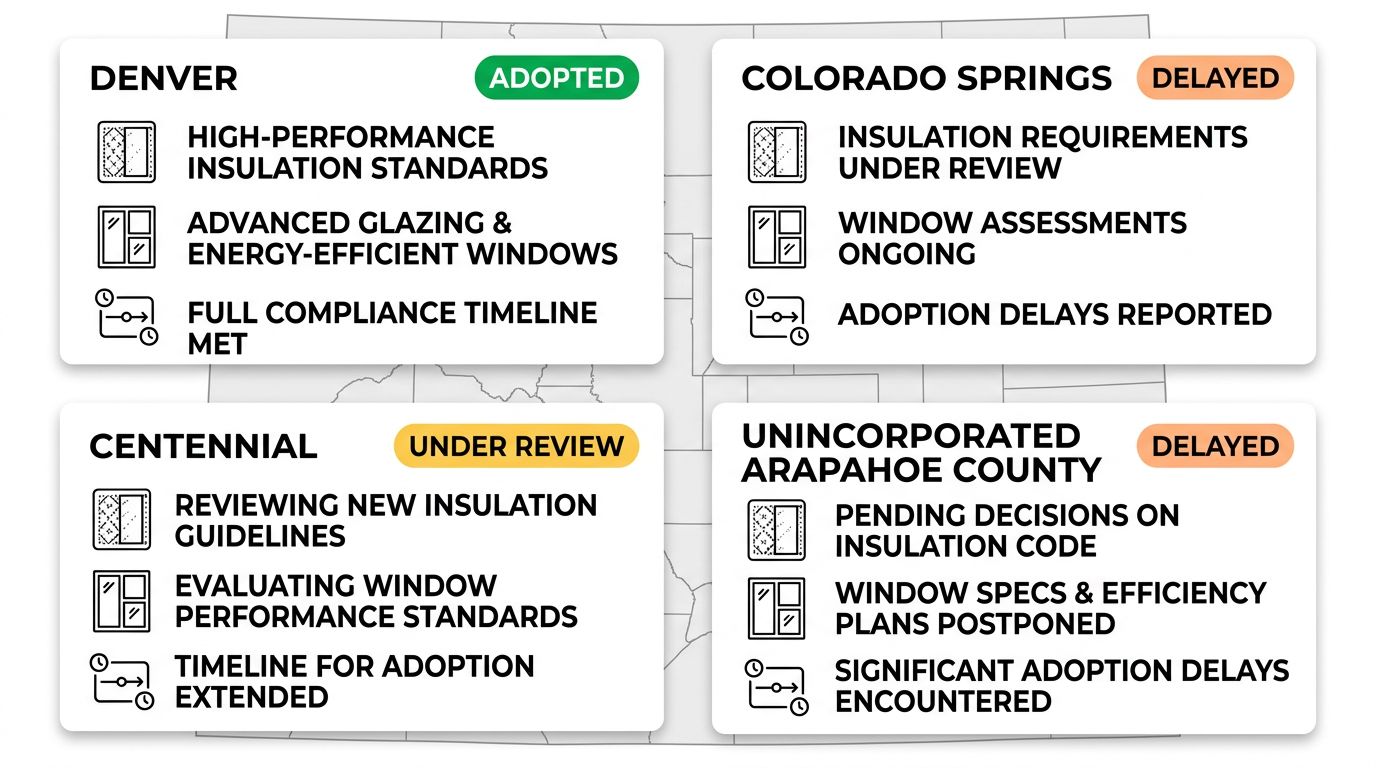
MLECC compliance status comparison across four Colorado jurisdictions
Window Performance Standards Under MLECC
Effective July 2026, window performance thresholds tighten considerably in most jurisdictions. For Denver, Centennial, and Unincorporated Arapahoe County, windows must achieve a U-value of 0.30 or lower and a Solar Heat Gain Coefficient (SHGC) of 0.25 or lower. These targets align with the broader energy star window requirements 2026 colorado and reflect a push toward higher-efficiency fenestration. Colorado Springs allows slightly more flexibility with a U-value of 0.35 and SHGC of 0.30, but still represents a meaningful upgrade over previous code cycles.
Meeting these standards often involves selecting products recognized under the Energy Star Most Efficient program, which may also help homeowners pursuing the energy star most efficient 2026 tax credit. Our team can help you navigate product selection to balance performance goals with your budget.
Estimates are preliminary and subject to change after site inspection and a full scope review. Project outcomes and timelines may vary based on site conditions, permitting, material availability, and unforeseen issues. Permit, inspection, and fee requirements vary by jurisdiction and may affect schedule and cost. Please consult a licensed contractor for definitive advice; verify licensure with the Colorado Department of Regulatory Agencies (DORA).
Let us help you get your project started — contact ACN Construction to discuss how MLECC requirements apply to your specific property.
Design-Build Services for Energy Code Compliance
At ACN Construction, our design-build services integrate energy code compliance from the outset. As part of this approach, we ensure every project meets current codes, including Colorado’s Model Low Energy and Carbon Code (MLEEC). The MLEEC is a statewide standard that pushes new construction and major remodels toward higher efficiency, and our single-point accountability means you never have to navigate these requirements alone.
The MLEEC code in Colorado sets stringent performance benchmarks for building envelopes, mechanical systems, and lighting. We handle all permitting and inspection coordination to streamline compliance. Key requirements we manage include:
- Energy Star window requirements for 2026 in Colorado, which specify U-factor and Solar Heat Gain Coefficient (SHGC) thresholds for window installations
- Insulation levels and air sealing details that meet or exceed prescribed values
- HVAC equipment sizing and duct leakage testing
We also guide clients toward the Energy Star Most Efficient 2026 tax credit. By selecting products that qualify for Energy Star Most Efficient 2026 tax credit eligibility, you can offset project costs while achieving exceptional performance. Our team stays current with evolving incentive programs so you can take full advantage of available credits.
For a deeper look at cost factors, see our FAQ on whole home remodel cost in Colorado. Estimates are preliminary and subject to change after site inspection and a full scope review. Permit, inspection, and fee requirements vary by jurisdiction and may affect schedule and cost. This expertise carries into every project type we handle, from kitchens to custom homes.
How Denver Remodels Align with the MLECC
Beyond general energy savings, Denver remodels must also align with the model low energy and carbon code mlecc colorado, which sets rigorous standards for building performance. At ACN Construction, our design-build process integrates MLECC compliance from initial design through construction, leveraging our deep familiarity with local permitting requirements in Denver and Centennial to streamline your project.
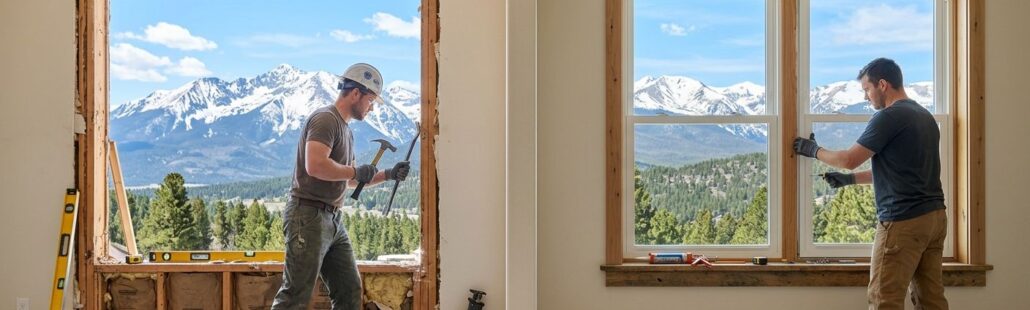
Our high-performance building envelope upgrades are designed to meet or exceed MLECC standards. We prioritize advanced air sealing and insulation techniques that dramatically reduce thermal transfer, helping your home achieve the code’s stringent envelope requirements. For openings, our fiberglass window replacement options deliver exceptional thermal stability and airtight seals, aligning with energy star window requirements 2026 colorado. According to our internal product expertise, fiberglass frames maintain their integrity for decades, minimizing energy loss far more effectively than standard alternatives.
To help offset investment costs, we guide clients through the energy star most efficient 2026 tax credit eligibility criteria. Our wellness sanctuary and net-zero-ready designs directly support the code’s carbon reduction goals. Code compliance depends on site-specific conditions; please consult with us for your project. Let us help you get your project started.
Your Step-by-Step Path to Code-Compliant Remodeling
Now that you understand the importance of code compliance, here is a step-by-step guide for your Denver or Centennial project.
- Research local codes and the Model Low Energy and Carbon Code (MLECC) in Colorado. The Home Builders Association of Colorado provides resources to clarify permit and energy code requirements. Early understanding saves time and prevents rework.
- Hire a design-build firm with proven code expertise, like ACN Construction. Our single-point accountability manages permits and inspections, ensuring compliance from design through completion. We coordinate all trades and reduce your risk.
- Obtain necessary permits and schedule inspections. Garage door replacement may require a permit and must meet energy code standards. For that work, hire a qualified garage door company near me to ensure proper installation and code adherence.
- Select energy-efficient windows and doors meeting Energy Star window requirements 2026 Colorado. Qualifying products can open eligibility for the Energy Star Most Efficient 2026 tax credit eligibility. We help you choose certified products and maximize available incentives.
Once you understand the steps, let us help you get your project started. Estimates are preliminary and subject to site inspection; consult a licensed contractor and verify licensure with DORA.
Building Better with the MLECC in Colorado
In Colorado, the model low energy and carbon code (MLECC) is the framework for low-energy and low-carbon construction in new homes and remodels. It works alongside International Building Code standards to guarantee energy performance and safety. As a design-build firm, we navigate MLECC requirements for Colorado projects, helping you meet compliance seamlessly. Our team leverages deep knowledge of MLECC to streamline permitting and inspections. Let us help you get your project started.
Resources
- Compare Fiberglass vs Vinyl Windows for Colorado Climate
- Find a Reliable Garage Door Contractor in Centennial
- Learn How Home Age Affects Remodeling Budgets in Colorado
- Plan for Material Supply Chain Challenges in 2026
- Compare LP SmartSide vs Fiber Cement Siding in Denver
- Plan for 2026 Home Remodeling Logistical Challenges
- Understand Cost Drivers for Home Remodeling in Colorado
- Explore International Building Code Standards and Training
- Learn 2021 IECC Energy Efficiency Standards for Homes
- Discover Polyiso Continuous Insulation Benefits and Resources
- Explore Residential Fenestration Industry News and Trends
- Join the Colorado Home Builders Association for Advocacy