Home Addition Planning Guide: Essential Steps for 2026
Table of Contents
- Planning Your Home Addition: A Guide for Colorado Homeowners
- Zoning, Permits, and Expansion Options for Denver Home Additions
- Why Thorough Planning Pays Off for Your Home Addition
- The Design-Build Process for Home Additions Step by Step
- Best Practices for a Successful Home Addition Project
- Turn Your Home Addition Vision into Reality with ACN Construction
Planning Your Home Addition: A Guide for Colorado Homeowners
This home addition planning guide is designed specifically for Colorado homeowners looking to expand their living space with confidence. A successful addition begins with careful planning that covers design, permits, and construction, and understanding these interconnected steps from the start helps you avoid costly delays and unexpected roadblocks. Define goals, scope, and timeline early to guide choices well.
Every well-executed project follows clear home addition construction phases: design, permitting, construction, and final inspection. Because municipalities across Colorado enforce distinct residential building permit requirements, knowing what your local jurisdiction expects is essential before any work begins. Working with a design-build team keeps the entire process under one roof, eliminating miscommunication between separate designers and contractors while streamlining approvals and timelines. We serve as a single point of contact, coordinating designs, permit submissions, and trades to keep your project on schedule.
We follow the best practices outlined by the remodeling industry association to ensure every project meets recognized professional standards for quality and ethics. Now let’s walk through each phase in detail, starting with how to define your project scope and budget.
Zoning, Permits, and Expansion Options for Denver Home Additions
Before you begin designing your addition, it’s crucial to understand local zoning and permit requirements. This home addition planning guide outlines how to navigate these rules in Denver and Centennial, compare the choice between building up or out, and estimate the cost of a typical project.
Zoning Requirements for Home Additions in Denver and Centennial
Denver and Centennial each have distinct zoning codes that govern home additions. In Denver, the Denver Zoning Code sets standards for setbacks, building height, and lot coverage, while in Centennial, regulations are defined in the Centennial Municipal Code. These rules ensure that your project aligns with neighborhood character and safety standards. To verify what is allowed on your property, use the City of Centennial’s online zoning verification tool or consult the Denver Zoning Map. Industry resources from the Colorado Home Builders Association can also help you verify local standards. According to the Colorado Home Builders Association, professional guidelines are essential for understanding residential building permit requirements. We always recommend checking these official sources early in your project.
Build Up or Build Out: Finding the Right Expansion Path
Choosing between adding a second story and extending at ground level is a major decision. A second-story addition, or pop top, preserves your yard but involves higher structural engineering costs and a longer construction timeline. These home addition construction phases require reinforcing the existing foundation and can be more disruptive, though they ultimately maximize living space without sacrificing outdoor areas. Ground-level extensions typically offer a lower per-square-foot cost and faster completion. However, they reduce yard space and may present foundation challenges depending on soil conditions. Both paths require careful planning to match your home’s existing aesthetics. We help you evaluate structural feasibility and design an expansion that seamlessly integrates with your current layout, ensuring the final result feels like a natural part of your home.
Estimating Costs for a 500 Square Foot Addition
For a 500-square-foot addition in the Denver metro area, the cost typically ranges from $150 to $300 per square foot. This estimate includes design fees, materials, required permits, and labor. Many variables can affect the final price, including soil conditions, the need for modifications to your existing structure, your choice of finishes, and seasonal demand. Understanding these factors during the planning phase is crucial for setting a realistic budget. Once you’ve identified your expansion path and budget, our team can help bring your project to life. For a precise estimate, Request a Quote from ACN Construction, and we will provide a personalized evaluation based on an on-site consultation. Let us help you get your project started. Stay connected with us through our social media channels.
Why Thorough Planning Pays Off for Your Home Addition
With the basics of what a home addition involves understood, let’s look at why careful planning transforms these projects into successes. A comprehensive home addition planning guide helps you anticipate challenges before they derail your timeline and budget.
The Benefits of Engaging a Design-Build Firm Early
Engaging a design-build firm early in the home addition construction phases creates a single point of accountability that streamlines communication. According to ACN Construction’s design-build service description, when design and construction teams work under one roof, change orders are significantly reduced because builders provide cost input during the design stage. This integration prevents the costly redesigns that occur when architects create plans without understanding construction realities.
Early collaboration means we identify potential issues before breaking ground. Our team reviews structural requirements, material availability, and installation sequencing during initial planning rather than discovering conflicts mid-project. This proactive approach shortens project timelines and keeps your addition on budget.
How Local Knowledge Streamlines Permitting and Compliance
Familiarity with residential building permit requirements in Centennial and the Denver area significantly reduces approval delays. Permitting timelines in the Denver metro area typically require four to eight weeks, and a contractor who understands these schedules can sequence work to maintain momentum while awaiting approvals. ACN Construction’s experience serving Centennial homeowners means we navigate specific zoning nuances—such as setback requirements and height limitations—that might otherwise trigger permit rejections.
Local knowledge also helps coordinate third-party approvals efficiently. Many Centennial neighborhoods require HOA review for exterior modifications, adding a layer of coordination that unfamiliar contractors often overlook. You can refer to centennial city services for official permit requirements and zoning information unique to your property.
Maximizing ROI Through Strategic Planning
Well-planned home additions typically recoup 60 to 70 percent of their cost at resale, according to industry benchmarks like Remodeling Magazine’s Cost vs. Value report. Achieving that return depends on strategic decisions made during the planning stage. Defining scope clearly—exact square footage, room count, and finish levels—prevents mid-project changes that inflate budgets without adding proportional value.
Strategic material selection and thoughtful phasing can reduce upfront expenses while still increasing property value. Considering average costs per square foot in the region helps establish realistic budgets without locking you into specific price points. ACN Construction’s FAQ addresses common questions about budgeting and timelines, reinforcing how early planning prevents costly mistakes. We encourage you to Request a Quote to discuss your project goals. Once the planning benefits are clear, the next step is understanding how to execute this plan with a trusted partner. Let us help you get your project started.
The Design-Build Process for Home Additions Step by Step
Starting a residential project can feel complex, but a clear home addition planning guide makes the journey manageable. We have organized every essential stage into four straightforward home addition construction phases so you know exactly what to expect. From the first site assessment to the final walk-through, our goal is to deliver a custom addition that fits your lifestyle and budget while respecting local regulations. Let’s walk through each step together.
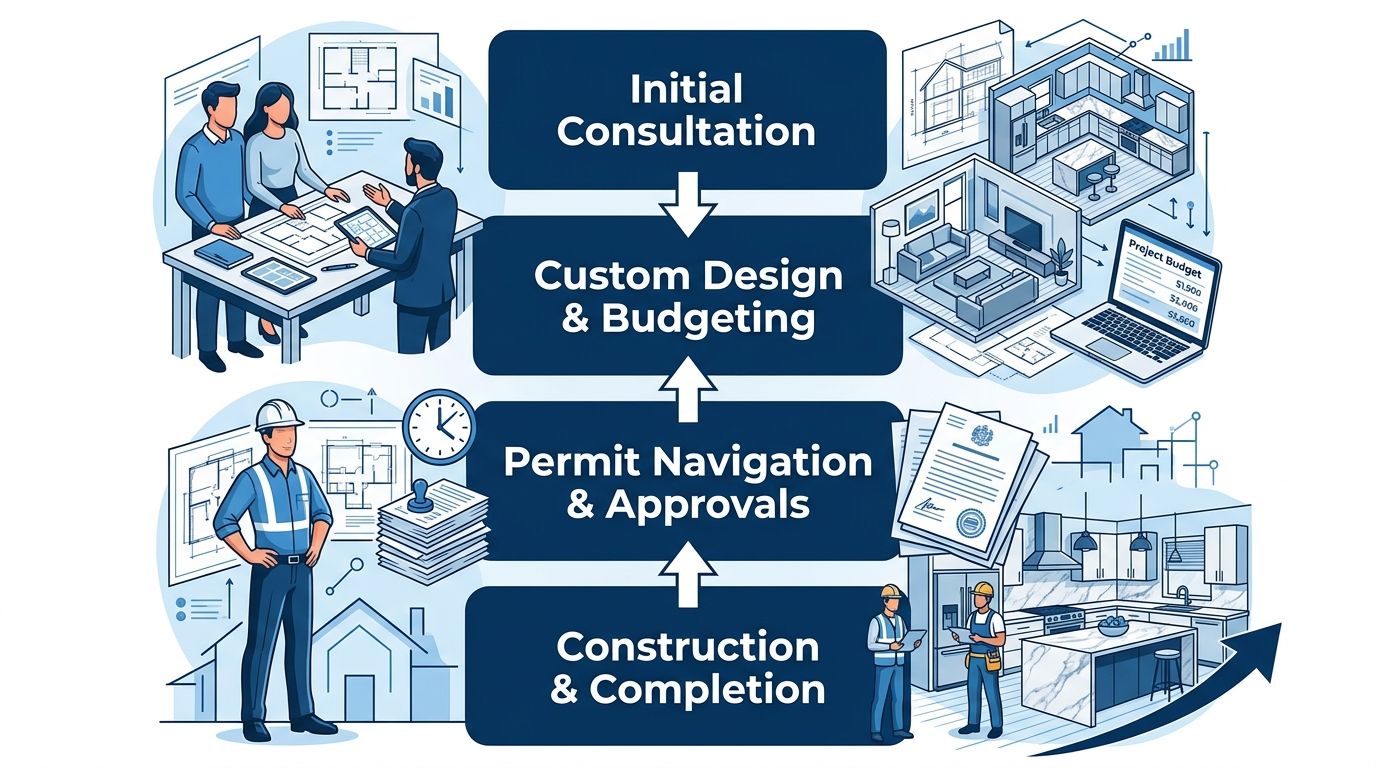
Professional design-build process visualization for home additions
Phase 1: Initial Consultation and Site Assessment
Your project begins with a comprehensive on-site meeting where we learn about your goals, preferred timeline, and budget expectations. During this visit, we evaluate critical site conditions such as lot lines, utility hookup locations, soil composition, and any property constraints that could influence structural possibilities. We also discuss your design inspiration and practical needs, whether you envision a guest suite for extended family or a dedicated home office. Because every Denver-area neighborhood has its own character, we tailor our feasibility review to match both your property’s physical characteristics and the surrounding architectural context. This early investigation helps us identify potential challenges before they become expensive surprises, setting a transparent foundation for all the home addition construction phases ahead.
Phase 2: Custom Design and Budgeting
After the assessment, our design team translates your vision into detailed floor plans, exterior elevations, and interior renderings that reflect your taste and functional requirements. We present material samples, finish options, and fixture selections so you can visualize how each choice influences the final look and cost. Collaboration is central to this stage. We encourage you to review every drawing, suggest adjustments, and explore value-engineering opportunities that preserve quality while respecting your target investment. For example, our completed en suite bathroom addition in Denver demonstrates how we tailored the layout and finishes to a homeowner’s specific needs and budget. Once selections are finalized, we compile a detailed cost estimate that breaks down materials, labor, engineering, and contingency allocations, giving you a clear financial picture before construction begins.
Phase 3: Permit Navigation and Approvals
Moving from design to construction requires navigating residential building permit requirements specific to Denver and surrounding municipalities such as Centennial. Our team prepares the full drawing package, including architectural, structural, and mechanical plans, and submits them to the local building department for review. We also coordinate any necessary homeowners association (HOA) submissions, ensuring that exterior modifications receive design-review approval where required. Based on current municipal processes, plan reviews typically span two to four weeks, depending on the scope and classification of the permit. We track every comment, schedule required inspections, and keep you informed of progress so you never feel left in the dark. By managing permit coordination internally, we help you avoid administrative delays and ensure your project complies with all applicable codes before the first shovel hits the ground.
Phase 4: Construction, Coordination, and Completion
With permits in hand, we mobilize our skilled trades team and establish a clear production schedule that sequences demolition, framing, rough-ins, drywall, flooring, and finish work efficiently. We coordinate material deliveries to align with each construction stage, minimizing on-site clutter and preventing workflow interruptions. Throughout the build, we schedule city inspections at framing, mechanical, and final stages to verify code compliance and maintain momentum. Our project management approach emphasizes daily communication, so you receive regular updates on progress, upcoming milestones, and any decisions that require your input. Before the final walk-through, our crew performs a detailed quality-control review to ensure every detail — from trim alignment to paint finish — meets our professional standards. Once we confirm your satisfaction, we hand over a fully finished, code-approved addition.
Ready to bring your vision to life with a team that prioritizes quality and transparency at every stage? Request a Quote today, or Call Us 24/7 to discuss your upcoming project.
Best Practices for a Successful Home Addition Project
With your design finalized, applying these best practices ensures the build runs smoothly. This home addition planning guide draws on our team’s experience across the Denver metro to give you a clear roadmap from hiring to final inspection.
Selecting the Right Contractor for Your Home Addition
A qualified home addition contractor in South Denver will hold the proper licenses, carry general liability and workers’ compensation insurance, and willingly share at least three local references from recent addition projects. We recommend asking for a portfolio of completed design-build additions so you can assess quality, craftsmanship, and style compatibility before signing a contract. Check online reviews and Better Business Bureau ratings specific to Centennial or South Denver to confirm the contractor’s standing in the communities they serve. A little diligence here keeps your investment safe and gives you confidence on day one.
Coordinating Permits, Trades, and Inspections
The home addition construction phases move faster when permits and inspections are locked in early. Residential building permit requirements in Colorado typically demand a lead time of four to six weeks, so we confirm that our clients’ applications are filed well before shovels break ground. Once framing, electrical, or plumbing work wraps up, schedule the corresponding rough-in inspection right away—catching issues immediately avoids the cost and frustration of rework. We keep a single project manager as your primary contact, which makes tracking progress, change orders, and inspection results seamless and transparent. Short, proactive coordination steps like these keep the entire build on track.
Managing Materials and Schedules for On-Time Delivery
Lead times for custom materials in Colorado can stretch eight to twelve weeks for windows and four to six weeks for cabinetry, so ordering early is non-negotiable. Our team builds a detailed schedule with milestones for every trade and adds a buffer of ten to fifteen percent of the total timeline to absorb snow days, freeze-thaw cycles, or material delays. We plan foundation and concrete work for the warmer months—typically May through October—keeping your project away from the weather risks that stall Colorado additions. Staying ahead of the calendar means your family moves in when you expect to. We monitor schedules closely and keep you informed throughout construction to avoid last-minute surprises along the way.
Following these steps sets your project up for success. In the next section, we’ll explore sample budgets for home additions in Colorado. When you’re ready to discuss your own plans, we invite you to Request a Quote and let us help you get your project started.
Turn Your Home Addition Vision into Reality with ACN Construction
As we wrap up this home addition planning guide, the path to your new space comes down to three essential stages. Successful projects move through careful planning and design, navigating residential building permit requirements, and progressing through defined home addition construction phases—a journey that demands coordination and expertise at every turn.
At ACN Construction, our design-build approach eliminates the typical headaches of managing separate designers and contractors. We handle every detail in-house, from securing the building permit process to final construction, ensuring your project stays on schedule. Our Centennial team coordinates trades and inspections, maintains clear communication, and uses a simple contact process for seamless, regular project updates. Whether you are planning a guest suite addition in Denver or a larger home expansion, our integrated team delivers quality that aligns with the standards of the National Association of the Remodeling Industry. This commitment to professionalism is the backbone of every project we take on.
Ready to get started? Request a Quote today to discuss your vision with our team in Centennial. Let us help you get your project started.
Resources
- Find Skilled Home Addition Contractors in South Denver
- Add a Guest Suite ADU for Rental Income in Denver
- Get Expert En Suite Bathroom Addition in Denver
- Find Trusted Home Renovation Contractors in Centennial
- Contact ACN Construction for Renovation Inquiries
- Find Professional Bathroom Addition Contractors in Denver
- Get Integrated Design-Build Services for Your Home
- Find Qualified Builders via Colorado Home Builders Association
- Access Online City Services and Permits in Centennial
- Use NARI to Find Trusted Remodeling Professionals