

Home Renovation Challenges 2026: Essential Guide for Homeowners
Table of Contents
- The Most Common Home Renovation Challenges in Centennial, Colorado for 2026
- Why Early Planning Reduces Renovation Stress
- How to Budget for Material Price Fluctuations
- The Value of a Professional Remodeling Partner
- The Renovation Process: Where Challenges Arise and How to Navigate Them in Centennial, Colorado
- Best Practices for Avoiding Renovation Delays and Budget Overruns in Centennial, Colorado
- Key Takeaways for a Successful Remodel in Centennial, Colorado in 2026
- Resources
The Most Common Home Renovation Challenges in Centennial, Colorado for 2026
While planning a renovation is exciting, 2026 brings three notable hurdles that Denver-area homeowners should understand. Homeowners face a unique set of home renovation challenges 2026, from supply-driven material delays to extended municipal permit waiting periods. Understanding these obstacles before breaking ground helps you plan realistically and avoid mid-project surprises.
Material Costs and Supply Chain Issues in 2026
Lumber, engineered flooring, and custom millwork remain among the most volatile categories in 2026. Industry data from the National Association of the Remodeling Industry (NARI) notes that global tariffs and limited freight capacity have pushed construction material lead times to 4–10 weeks for windows, cabinetry, and specialty plumbing fixtures. In the Denver metro area, mid-grade hardwood flooring prices have climbed approximately 12–18 percent above 2024 baselines, while imported tile and stone products fluctuate week to week.
ACN Construction has seen how unpredictable inventory directly affects project schedules. When a common item suddenly shifts from in-stock to backordered, the entire construction sequence can stall. Proactive sourcing and early material selection are no longer optional steps — they are essential risk-management tools for any renovation in the Centennial market.
Building Permit Approval Timelines and Delays
Building permit approval timelines in Centennial typically range from four to eight weeks, though complex projects can take longer. The top three reasons for delay are incomplete application packages, zoning non-compliance flagged during review, and mechanical plan deficiencies requiring engineer corrections. For any structural change, the Centennial Building Division mandates a pre-submission appointment, and stamped plans must come from a Colorado-licensed architect or structural engineer.
NARI guidelines reinforce that accurate, complete submissions dramatically reduce back-and-forth with reviewers. We have found that investing extra time during the preparation phase often trims weeks off the approval clock. Even with ideal paperwork, homeowners should build a permitting buffer into their renovation calendar to avoid frustrating gaps between phases.
The Hidden Costs of Renovating an Older Home in Denver
Older homes in Denver’s established suburbs, especially those built before 1980, frequently conceal costly surprises behind their walls. One of the most common shock expenses is knob-and-tube wiring replacement, which can run $3,000–$6,000 depending on square footage. Asbestos abatement in textured ceilings, pipe insulation, and vintage floor tiles adds another layer of unplanned cost. Unexpected foundation settlement corrections also appear when walls are opened, requiring immediate structural attention.
These discoveries underline why a minimum 15–20 percent contingency fund is prudent for any whole-home remodel in the area. When hidden conditions surface, having dedicated reserves keeps your renovation moving forward without difficult financial choices.
Each of these renovation hurdles 2026 can be dramatically reduced with a full-service approach that handles procurement, permits, and inspections — a subject we’ll explore next. For homeowners facing these challenges, a complete remodeling service in Denver can streamline every stage, from material sourcing to final inspection. Let us help you get your project started.
While the range of home renovation challenges 2026 homeowners face can feel overwhelming, strategic planning transforms obstacles into manageable tasks. In Centennial, Colorado, specific local regulations, material unpredictability, and permit complexities often intensify these hurdles. However, by investing time in a thorough pre-construction plan, you can set realistic expectations and drastically reduce anxiety. Our team at ACN Construction believes that a well-prepared homeowner is an empowered one, and the following strategies are designed to help you navigate every stage of your project with confidence, turning potential pitfalls into a smooth, step-by-step journey toward your dream home.
Why Early Planning Reduces Renovation Stress
Creating a detailed plan at least three months before your construction start date is one of the most effective ways to mitigate stress. This period allows you to identify potential bottlenecks early, such as navigating Centennial’s HOA approval processes for exterior work. A common planning obstacle we help clients manage is understanding local building permit approval timelines. In the Denver metro area, review periods can typically take four to six weeks, and diving into these schedules early prevents site stoppages. Early planning also gives you the time to research and secure quality subcontractors, finalize design selections without rush fees, and coordinate a realistic project schedule that accounts for these critical administrative steps. By visualizing the sequence of events and preparing for these hurdles, the renovation process becomes a structured pathway rather than a chaotic ordeal.
How to Budget for Material Price Fluctuations
A robust budget is your financial blueprint, and it must account for the volatile nature of the construction market. We advise clients to research current prices for lumber, countertops, and fixtures from local Centennial suppliers as a foundation. Understanding construction material lead times is equally crucial, as extended waits can tempt costly last-minute substitutions. To protect your finances from these market swings, we recommend building a contingency fund of 10 to 20 percent into your overall budget. This dedicated buffer is not for optional upgrades but for absorbing unexpected material cost increases or necessary changes due to extended lead times, safeguarding your project’s financial health from start to finish.
The Value of a Professional Remodeling Partner
Navigating renovation challenges requires more than just a strong plan; it demands local expertise. Hiring an experienced partner like ACN Construction provides significant value in tackling project complexities. We manage every administrative detail, from submitting permit applications and coordinating city inspections to leveraging our long-standing relationships with local suppliers to mitigate material delays. Our team stays updated through NARI remodeling resources to bring you the best industry practices and solutions for Centennial homes. With a solid plan and the right professional team, your vision is within easy reach. Let us help you get your project started.
The Renovation Process: Where Challenges Arise and How to Navigate Them in Centennial, Colorado
Embarking on a home remodel in Centennial, Colorado, is an exciting endeavor, yet it’s essential to understand that home renovation challenges 2026 are evolving. From navigating local regulations to managing extended construction material lead times, a successful project requires thorough planning and a clear appreciation of the entire process. At ACN Construction, our integrated design-build approach is tailored to guide homeowners through these complexities, transforming potential obstacles into a smooth, rewarding experience.
Step-by-Step Home Renovation Process From Design to Finishing
A typical home renovation unfolds in four distinct phases, each with its own set of potential hurdles. Understanding this pathway helps set realistic expectations.
- Design and Planning: This foundational phase involves translating your vision into actionable blueprints. We focus on material selection, budget definition, and overall project scope. Here in Centennial, early coordination is key, as many projects require HOA approval for exterior modifications. A common early hurdle is underestimating construction material lead times, which can significantly impact your project timeline if not factored into the procurement plan from the start.
- Demolition: Once permits are secured, the physical teardown begins. This stage often reveals unforeseen issues like outdated wiring or hidden water damage behind walls, which can cause budget or schedule adjustments. Our team’s experience with homes built from the 1990s to the early 2000s, common in the Centennial area, allows us to anticipate and address these common structural quirks proactively.
- Construction: This is the core building phase, where rough-ins for electrical, plumbing, and HVAC are installed, followed by drywall, flooring, and more. Delays here frequently arise from waiting on specialized subcontractors or materials that were ordered late. We manage this by coordinating all trades under one roof, ensuring a logical sequence of work that minimizes downtime.
- Finishing: The final touches include painting, trim, fixture installation, and a thorough deep clean. This stage is detail-intensive and requires extensive coordination to ensure every element aligns with the original design. The final walkthrough marks the project’s completion, but only after we’ve ensured every detail meets our quality standards.
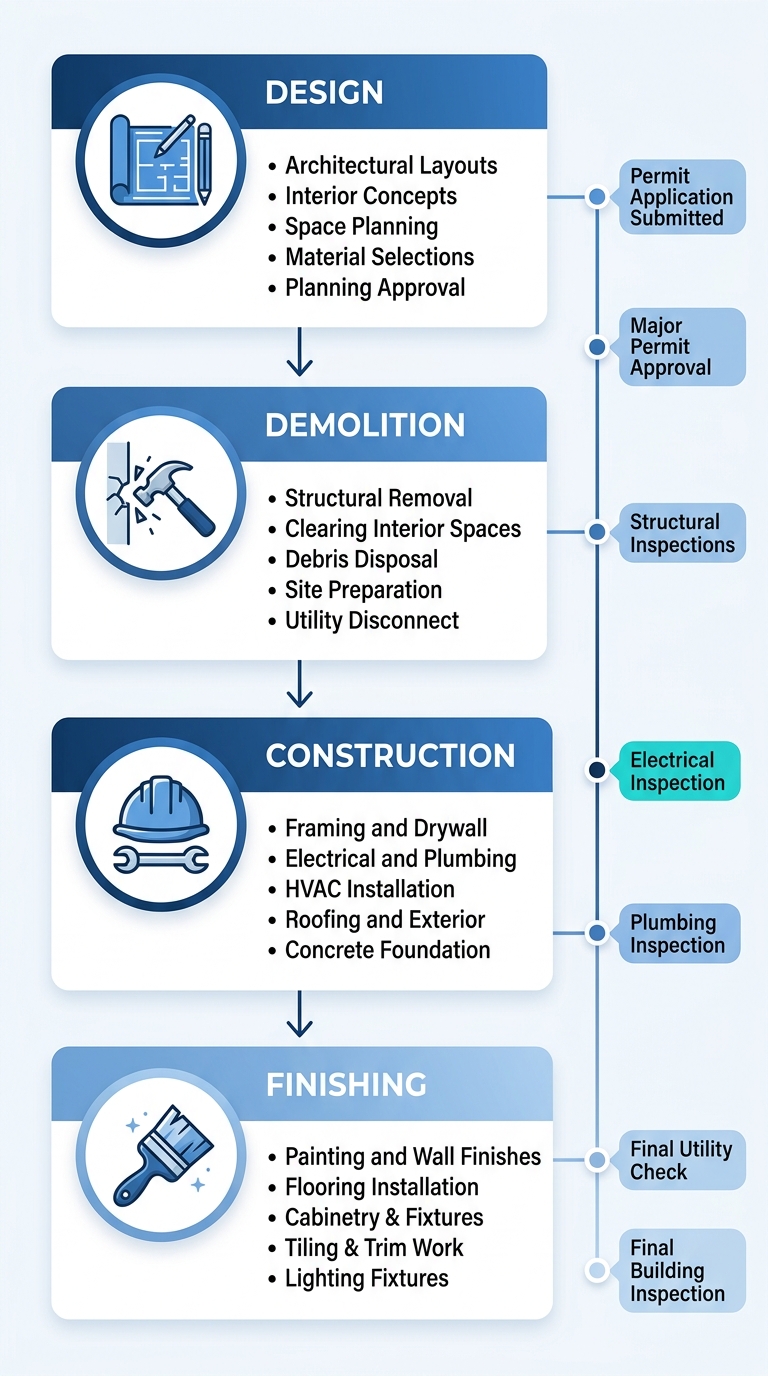 Renovation process flow with design, demolition, construction, and finishing stages.
This visual journey underscores where planning and professional oversight are most critical. A deep understanding of local regulations is the bridge between design and demolition, making the permit process a pivotal early step.
Navigating Building Permits and Inspections
Understanding the Centennial building permit process is crucial for a smooth renovation. The City of Centennial requires permits for most structural, electrical, and plumbing work to ensure code compliance. The application process typically involves submitting detailed project drawings and specifications, and building permit approval timelines can vary depending on project complexity and city workload. Once a permit is issued and work begins, inspections are scheduled at various stages, such as after rough-ins and upon final completion. We handle this entire process on your behalf, ensuring all work is prepared and ready to pass inspection, which prevents costly re-dos and keeps your project moving forward legally and safely.
Tips for Living in Your Home During a Remodel
Living through a remodel in Centennial requires a little strategy, but it is entirely manageable. We advise our clients to create a temporary, sealed-off living zone away from the construction, perhaps turning a finished basement into a mini-apartment. Setting up a temporary kitchenette with a microwave and coffee maker can maintain a semblance of normal routine. Managing expectations about dust and noise is also vital; we use containment measures, but a daily dusting will become part of your routine. Our team communicates the daily work schedule, helping you plan your days and maintain harmony at home. Let us help you get your project started.
Best Practices for Avoiding Renovation Delays and Budget Overruns in Centennial, Colorado
Embarking on a renovation is an exciting step, but for many homeowners, the process is quickly overshadowed by stress when timelines stretch and budgets balloon. One of the most significant home renovation challenges 2026 brings is navigating a landscape of fluctuating material availability and busy contractor schedules. But with the right approach, these issues can be minimized. Here are our best practices, built on years of guiding Centennial homeowners through successful, on-budget remodels.
Choosing the Right Contractor for Your Remodel
The single most important decision you will make is selecting your remodeling partner. A qualified, local contractor is your best defense against delays and unexpected costs. We recommend a thorough vetting process that goes beyond a simple online search.
- Verify Local Credentials: Always confirm that any contractor you consider is licensed and insured. In Colorado, you can verify a license through the Department of Regulatory Agencies (DORA). Crucially, ensure they are familiar with the City of Centennial’s specific building codes and permit processes, as local expertise prevents administrative holdups.
- Review a Local Portfolio: Ask to see examples of past projects in the area. Reviewing a completed whole home remodel in Centennial can give you confidence in the builder’s quality and timeline. It demonstrates their hands-on experience with Centennial’s permitting requirements and architectural styles.
- Check References and Get Itemized Bids: Speak directly with past clients about their experience. Did the project stay on schedule? Was communication clear? We also advise requesting detailed, written bids from at least three contractors. Compare them side-by-side, not just by price, but by what is included in the scope, the specified materials, and the projected timeline. A vague bid is a red flag for potential hidden costs down the line.
Creating a Realistic Budget and Contingency Plan
A solid budget is your project’s financial blueprint, and it must account for more than just the cost of tiles and fixtures. Our experience shows that the most stress-free remodels include a meticulously planned financial cushion.
- Know Your Hard Costs: A realistic budget starts with a detailed bid that itemizes everything from demolition to the final coat of paint. Be sure this plan accounts for current construction material lead times, as custom items like cabinetry or specialty windows can have delivery dates months in the future. Discuss these timelines with your contractor to confirm they are built into the project schedule.
- Build a Contingency Fund: We strongly recommend setting aside a contingency fund of 10-20% of the total project cost. This isn’t an optional extra; it’s a necessity. In Centennial, this fund covers inevitable surprises like hidden water damage behind old walls or the need to upgrade wiring to meet current code.
- Anticipate Local Fees: Your budget should include line items for typical building permit approval timelines and fees. Permitting in Centennial is a necessary step that can take several weeks and has associated costs. Securing these permits before any demolition begins is a critical scheduling step to avoid a halt in work, which is why planning for them financially and logistically is key to avoiding a stressful delay.
Maintaining Open Communication to Avoid Delays
Even with the best plan, a breakdown in communication is one of the fastest ways a renovation can go off the rails. We believe a transparent partnership is the key to staying on track.
- Establish a Communication Cadence: From the outset, agree on a regular check-in schedule. We find that a brief weekly walkthrough with your project manager at the job site is invaluable for catching small issues before they become big problems.
- Use a Shared Digital Log: To keep decisions, approvals, and change orders from getting lost in a chain of emails, we recommend using a simple project management tool or a shared spreadsheet. This creates a single source of truth for both you and the contractor, documenting every choice and its impact on the budget and timeline. Addressing questions proactively keeps the project moving smoothly.
By following these steps, you set your project up for success—and we’re here to help every step of the way. Let us help you get your project started. Request a Quote today to discuss your vision with our team.
Key Takeaways for a Successful Remodel in Centennial, Colorado in 2026
Before we dive into the details, here are the key takeaways for a successful remodel in Centennial in 2026. Homeowners across the South Denver metro area are facing a unique set of home renovation challenges 2026 that require proactive planning and local expertise.
- Start the permit process early. Building permit approval timelines in Centennial can be unpredictable. We advise our clients to submit their applications at least 2–3 months before the desired construction start date to account for the city’s municipal review cycle and avoid costly project delays.
- Order materials well in advance. Extended construction material lead times continue to be a critical factor in 2026. To keep your project on schedule, we recommend ordering long-lead items like custom cabinetry, windows, and specialty flooring a minimum of 4–6 months before they are needed for installation.
- Partner with a local expert. Navigating Centennial’s specific permit office and vendor network requires local knowledge. As a design-build firm deeply rooted in this community, ACN Construction manages this entire process, ensuring your project stays compliant and progresses smoothly through every phase.
- Build a realistic contingency fund. Material price volatility remains a reality. We strongly suggest setting aside a contingency of 15–20% of your total project budget to comfortably cover any unforeseen costs without compromising your vision or quality standards.
We understand that a remodel is a significant investment, and our team is committed to guiding you through every step. Let us help you get your project started. Request a Quote today.
Resources
- Expert Home Remodeling Services in South Denver
- Expert Whole Home Remodel in Centennial
- Full-Service Home Remodeling in Denver
- Contact ACN Construction for Remodeling Services
- Trusted Home Renovation Contractors in Centennial
- Trusted General Contractor for Denver Renovations
- Contact ACN Construction for Kitchen Remodeling
- Find NARI Certified Remodeling Professionals
- Centennial Online Portal for Permits and Services


