Sustainable Kitchen Materials 2026: Complete Guide
Table of Contents
- Eco-Friendly Kitchen Remodeling in Colorado: 2026 Sustainable Material Trends
- Planning Your Sustainable Kitchen Remodel
- Select Eco-Friendly Countertops for Your Colorado Kitchen
- Choose Low-VOC Paints and Finishes for Healthy Indoor Air
- Source Responsibly Harvested Wood Cabinetry
- Select Durable and Sustainable Kitchen Flooring
Eco-Friendly Kitchen Remodeling in Colorado: 2026 Sustainable Material Trends
Sustainable kitchen materials 2026 are transforming how homeowners in Centennial, Colorado approach eco-friendly remodels. From selecting low-impact materials to planning for energy efficiency, the choices you make can reduce your home’s carbon footprint while increasing comfort. But a truly sustainable kitchen remodel also considers the hidden structural factors that keep it standing—especially in our area’s variable soils.
If your project involves removing a load-bearing wall or installing heavier stone countertops, understanding helical pier soil bearing capacity is essential for a safe, durable foundation. We also advise homeowners on the impact of expansive clay soils common along the Front Range, where deeper pier embedment may be necessary to prevent settlement. We help Centennial homeowners navigate these concerns, drawing on our technical guide to local soil conditions and deep-foundation design.
Choosing the right materials and anticipating structural needs begins with careful planning—a process we walk you through in the next section, Planning Your Sustainable Kitchen Remodel.
Planning Your Sustainable Kitchen Remodel
Having explored the latest sustainable kitchen materials 2026 trends, the next step is to develop a focused plan for your Centennial home. Starting with a realistic budget and timeline ensures your eco-friendly vision stays on track from day one.
We recommend defining your sustainability priorities early in the process. Whether your top picks include recycled glass countertops, low-VOC finishes, or energy-efficient appliances, writing down a clear list of “must-haves” helps prevent scope creep and supports smarter decision-making.
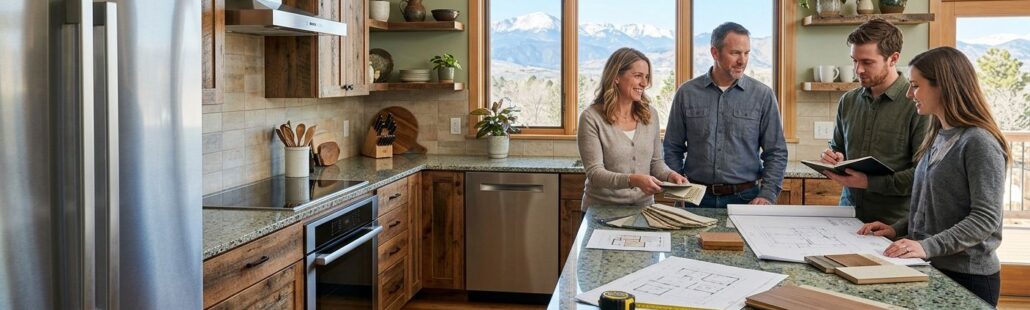
A full-service design-build approach gives you a single point of accountability. As your design-build partner, we coordinate everything from material lead times to site assessments, so you can spend your energy on choices that reflect your values. For a major kitchen remodel, we often include a site assessment to evaluate foundation conditions—a practical planning step that takes into account Centennial’s expansive clay soils and helps ensure your sustainable kitchen is built on a solid base.
Planning also means considering the lead times of specialty sustainable products. Ordering early for items like custom recycled-content cabinetry or bespoke low-VOC finishes keeps your timeline realistic and your project moving forward.
With the planning foundation in place, the next major choice is selecting eco-friendly countertops—a decision we explore in the next section.
Select Eco-Friendly Countertops for Your Colorado Kitchen
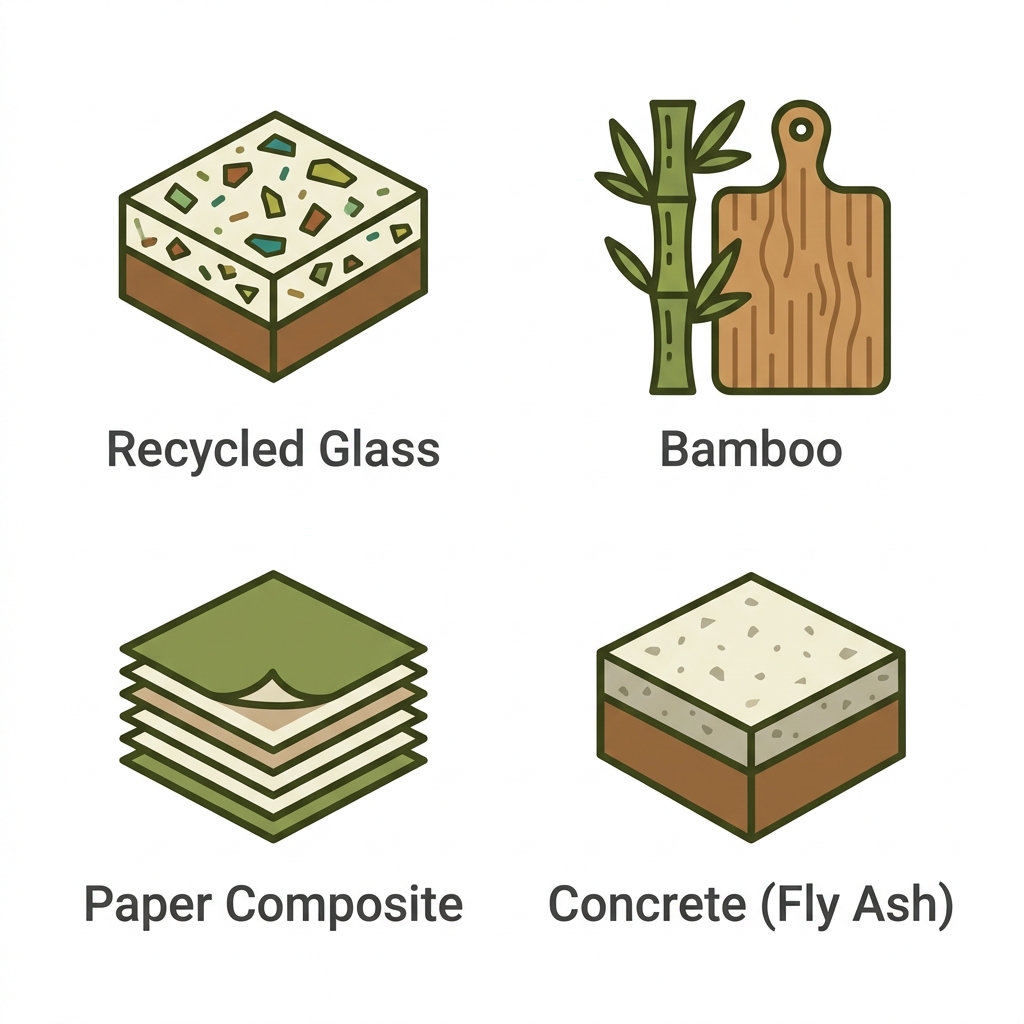
Eco-friendly materials that thrive in Centennial’s dry climate include:
- Recycled Glass: Post-consumer glass, non-porous—often resists heat and stains.
- Bamboo Butcher Block: Rapidly renewable grass; low-VOC adhesives, but may need extra care against scratches and moisture.
- Paper Composite: Post-consumer recycled paper and resin; durable matte finish often withstands heat and staining.
- Concrete with Fly Ash or Recycled Aggregate: Cuts cement use, endlessly customizable.
For a truly renewable surface pairing, consider cork kitchen flooring alongside your new countertops.
Because concrete slabs add significant load, our design-build team evaluates structural requirements using internal engineering resources such as our guide on helical pier soil bearing capacity in Centennial. Call Us 24/7 to discuss your material preferences and receive a custom quote.
Choose Low-VOC Paints and Finishes for Healthy Indoor Air
Eco-friendly countertops are an important first step, but the paints and finishes you apply also matter for indoor air. Low-VOC products off-gas fewer volatile organic compounds, keeping your kitchen’s air healthier.
In a kitchen, we recommend prioritizing low-VOC products for wall and ceiling paint, cabinet paint and stain, trim and door finishes, and adhesives and caulk. Look for GreenGuard or Green Seal certifications on labels to confirm real low-VOC performance.
The simplest change: choose water-based over solvent-based products. During the design phase of our Design Build Services, we specify these healthier finishes from the start for homes across the Denver metro area—the same team that designs helical pier foundations for structural integrity also plans low-VOC finishes for your indoor air.
Low-VOC finishes and responsibly harvested wood cabinetry go hand in hand. Next, we’ll cover how to source cabinetry from responsibly managed forests.
Source Responsibly Harvested Wood Cabinetry
After choosing low-VOC paints for healthier indoor air, the next step is to examine the cabinetry materials that surround you daily. Look for cabinets bearing Forest Stewardship Council (FSC) certification and chain-of-custody documentation, which signal wood from responsibly managed forests.
Ask suppliers whether the cabinet boxes, drawer fronts, and door panels use formaldehyde-free or no-added-formaldehyde (NAF) plywood or MDF cores. This keeps your kitchen’s indoor air free from unnecessary chemicals, aligning with the healthy-home focus of your remodel.
Our design-build team can help you verify sourcing documentation and select certified cabinet lines as part of our Complete Remodeling process in Centennial, CO. We also evaluate site conditions to ensure your kitchen can properly support heavier solid-wood cabinetry, leaning on our structural expertise. Hardwoods like maple, oak, and walnut from verified suppliers offer durability and environmental stewardship. Just as cabinetry deserves responsible sourcing, the flooring you choose should meet similar sustainability standards.
Select Durable and Sustainable Kitchen Flooring
Just as responsibly harvested wood anchors your cabinetry, your flooring choice defines both the look and longevity of the space.
Eco-friendly options such as bamboo, cork, reclaimed hardwood, and recycled porcelain tile each bring unique benefits. Bamboo resists moisture but can scratch; cork cushions footfalls yet may fade; reclaimed hardwood offers unmatched character but needs sealing; and recycled tile stands up to spills while adding substantial weight.
For heavier materials like natural stone or large-format tile, ACN Construction’s structural expertise—demonstrated in our guide to soil bearing capacity for helical piers in Centennial—confirms that proper foundation support is critical. Because final costs depend on material selection and site conditions, we recommend a custom quote rather than fixed-price promises. All recommendations are conditional on a licensed professional’s site-specific evaluation.
With a durable, sustainable floor selected, you’ll be ready to design a zero-waste kitchen layout that completes your eco-friendly vision.
Design a Zero-Waste Kitchen Layout
Once you’ve chosen durable, sustainable flooring, the next step in creating a wellness sanctuary home remodeling is a layout that prevents waste from the start.
- We arrange dry storage, refrigeration, prep, cooking, and cleaning zones for natural movement of food and tools.
- A dedicated waste station near the sink and prep zone houses built-in, labeled compartments for compost, recycling, and landfill.
- Bulk goods storage uses pull-out pantry drawers, counter-depth jars, and visible produce bins to minimize spoilage.
- Cabinetry and countertops in 12-, 15-, 18-, 21-, and 24-inch standard sizes reduce material offcuts; we specify low-VOC, recycled-content finishes and locally sourced materials.
If the layout moves a wall or adds floor area, we consult ACN Construction’s soil bearing capacity guide for helical piers and rely on our design-build team to verify load paths—never DIY engineering advice.
Finally, this zero-waste layout reserves properly sized, ventilated zones for energy-efficient appliances—the focus of “Choose Energy-Efficient Appliances for 2026.”
Choose Energy-Efficient Appliances for 2026
With a layout that reduces waste and streamlines workflow, the next step is selecting appliances that minimize energy use.
- Efficiency Certification: Start with ENERGY STAR® certified refrigerators, dishwashers, and ranges. Induction cooktops and convection ovens are efficient options that also respond quickly.
- Right-Sized Appliances: Choose capacities that match your household’s actual needs to avoid wasting energy on oversized units.
- Smart Placement: Position the refrigerator away from the oven and dishwasher to prevent heat transfer that forces the compressor to work harder. This simple placement aligns with your zero-waste layout.
- Smart Features: Look for load-sensing dishwashers and adaptive defrost in refrigerators, which can reduce long-term energy use without sacrificing performance.
Once your efficient appliances are selected, integrating them into a visually cohesive design becomes the next priority. If your appliance run requires removing a load-bearing wall or adding square footage, our team can assess the structural needs, including soil bearing capacity for helical piers where necessary.
Integrate Sustainable Choices into a Cohesive Design
After selecting energy-efficient appliances and considering sustainable kitchen materials 2026, the next step is to weave those individual choices into a unified design. A cohesive sustainable kitchen should feel intentional and connected, not like a checklist of unrelated eco-features. Thoughtful pairing of materials creates visual harmony while reinforcing your home’s overall aesthetic.
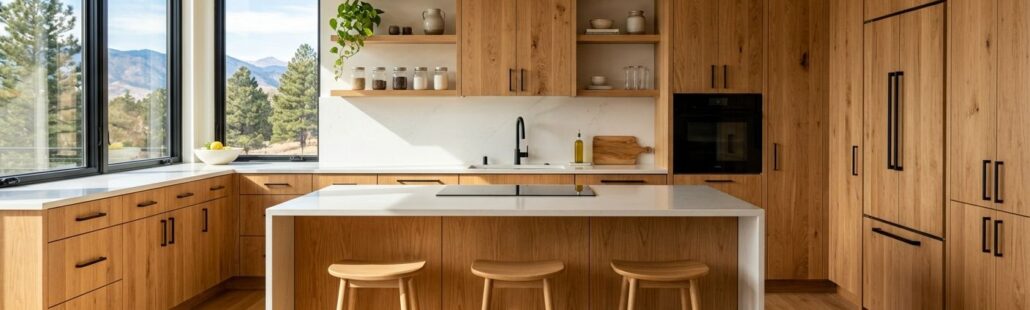
Recycled glass countertops pair beautifully with reclaimed wood cabinetry, blending modern eco-consciousness with organic warmth. Matching low-VOC finishes with natural stone backsplashes creates a clean, healthy environment without sacrificing durability. These combinations show that sustainability can enhance function and style.
Beyond aesthetics, durability and maintenance matter. A cohesive design also means selecting materials that stand up to daily use while reflecting your home’s architectural style—whether modern, traditional, or transitional. When you work with our design-build team in Centennial, we help ensure that every sustainable element integrates seamlessly, from the foundation to the finish. A well-coordinated design not only looks better but also avoids remodeling pitfalls.
Troubleshooting Common Sustainable Remodeling Challenges
Even a carefully integrated sustainable design plan can meet unexpected on-site hurdles. At ACN Construction, we anticipate and resolve them proactively. Three common issues we address in sustainable remodels include:
- Site-specific foundation and soil conditions
- Sustainable material selection and availability in the Centennial area
- Budgeting for a custom, durable solution
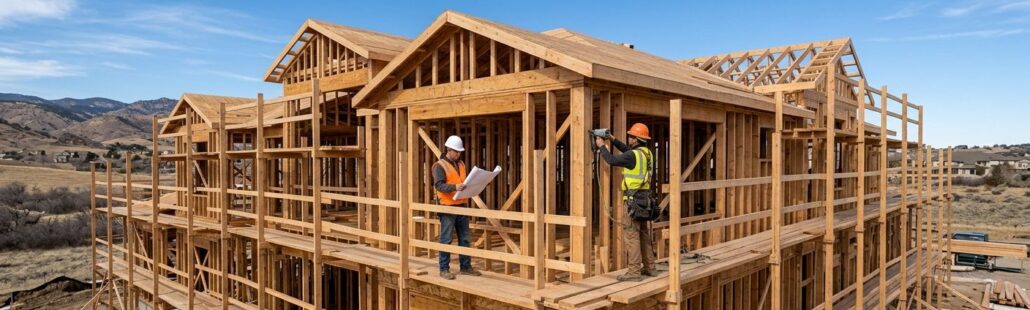
Structural changes—such as removing a load-bearing wall for an open-concept layout or adding large window openings—demand a clear understanding of the soil’s bearing capacity before work begins. In Centennial and across the Denver metro, expansive clay soils are common and can shift with seasonal moisture, threatening a building’s stability. We perform site-specific evaluations using soil borings or penetration testing to design foundation modifications that last. As our guide to soil bearing capacity for helical piers explains, helical piers reach stable strata well below the surface and provide a durable foundation solution. This stabilization protects the home’s structural integrity and supports the energy-efficiency and wellness goals of a sustainable remodel.
Sustainable material choices present another challenge. Local availability and lead times for eco-friendly finishes in Centennial and across the Denver metro can vary; we help clients balance green attributes with the durability and performance their project demands. Every project receives a written scope of work and a custom quote after a thorough site inspection. Navigating local building codes and permits is part of our design-build service, providing a single point of accountability.
Kitchens are a frequent place where these challenges converge—foundation modifications for island supports, specialty materials, and careful budgeting intersect. In the next section, we’ll explore how to create a greener kitchen that overcomes these hurdles.
Creating a Greener Kitchen with ACN Construction
Even after solving common sustainable remodeling challenges, the path to a more efficient kitchen is well worth the effort. Combining sustainable kitchen materials 2026 with energy- and water-efficient systems reduces environmental impact while supporting long-term home value and wellness.
As a design-build firm, we provide single-point accountability, ensuring your project stays on track. Our deep knowledge of Centennial and Denver-area codes, permitting, and site conditions means we evaluate every detail. From finishes to structural considerations like soil bearing capacity for helical pier foundations, we make sure your remodel rests on a solid plan. That thorough approach, common to our foundation work, extends to every sustainable kitchen we create.
Contact us for a consultation and custom quote. Keep in mind that estimates are preliminary and subject to change after site inspection; project outcomes depend on site conditions, permitting, material availability, and unforeseen issues. Permit and fee requirements vary by jurisdiction. Consult a licensed contractor; verify licensure with DORA.
Start Your Sustainable Kitchen Remodel
Now that you have a complete guide to sustainable kitchen materials for 2026, you’re ready to turn these ideas into a reality. From responsibly harvested cabinetry to low-VOC finishes, every detail contributes to a healthier, more eco-friendly home. Our design-build team at ACN Construction can help you plan and implement these choices with single-point accountability. We understand the local climate and building practices in Centennial, Colorado, ensuring your remodel is both beautiful and durable. Scheduling a consultation is the next practical step to begin your project. We’ll discuss your vision and provide a custom quote based on a site evaluation. Let’s work together to create the sustainable kitchen you’ve been researching.