Walk-In Shower Conversion Cost: Get Your 2026 Price
Table of Contents
- Walk-In Shower Conversion Costs: A Comprehensive Guide for Denver Homeowners
- Understanding Walk-In Shower Conversion Costs and Design Options
- Key Design and Material Choices for Your Walk-In Shower
- The Walk-In Shower Conversion Process: Permits, Steps, and Timelines
- How a Walk-In Shower Conversion Can Boost Your Home’s Resale Value
- Frequently Asked Questions About Walk-In Shower Conversions
- Start Your Walk-In Shower Conversion Journey with ACN Construction
- Resources
Walk-In Shower Conversion Costs: A Comprehensive Guide for Denver Homeowners
If you’re researching the walk-in shower conversion cost in Denver, understanding the factors behind the numbers is essential. A typical tub-to-shower conversion in the Centennial area ranges based on the amount of work required to get the old fixtures and tile work out, but this a preliminary estimate can help give you a pretty accurate picture of man hours that depends heavily on site conditions, materials, and project scope. A site inspection is always required for a precise, written estimate.
The final cost to install a walk-in shower is influenced by several key elements. Labor accounts for a significant portion, especially if plumbing relocation or structural modifications, such as wall removal or floor leveling, are needed. Materials like tile, glass, and fixtures vary widely in price, and permit fees differ by Denver metro jurisdiction. A straight tub-to-shower conversion that uses existing plumbing typically costs less than a custom curb-less shower installation, which often includes specialty features like steam and requires additional waterproofing and design work.
Choosing a design-build approach streamlines the process and can reduce unexpected costs. Our team at ACN Construction, as trusted home renovation contractors, manages every phase from concept to final inspection, ensuring a single point of accountability and a smoother timeline. We recommend consulting a licensed contractor and verifying credentials with the Colorado Department of Regulatory Agencies (DORA). Contact us today to Request a Quote or Call Us 24/7 to discuss your project. Let us help you get your project started.
Understanding Walk-In Shower Conversion Costs and Design Options
Now that you understand the benefits of a modern, accessible shower, we can break down the costs and design options for a walk-in shower conversion cost in Denver. Choosing the right approach depends on your budget, long-term needs, and the existing bathroom layout. As a design-build firm managing every phase, we simplify the process from initial planning through final inspection, handling all trade coordination and permitting in Centennial and the broader Colorado region. The two primary paths are a tub-to-shower conversion and a curbless shower installation, each offering distinct advantages in accessibility, cost, and project complexity.
The following table compares these two popular shower conversion options in key areas that influence your decision. All costs are preliminary estimates based on Denver market averages as of 2026 and are subject to change after a site inspection and full scope review. Industry data on return on investment is sourced from the National Association of the Remodeling Industry (NARI) and the National Association of Home Builders (NAHB).
| Feature | Tub-to-Shower Conversion | Curbless Shower Installation |
|---|---|---|
| Accessibility | Step-over threshold; good for most | Zero-step entry; ideal for aging-in-place |
| Waterproofing Complexity | Moderate; requires proper sealing | Higher; sloping and drainage critical |
| Average Timeline | 3–5 days | 5–8 days |
| Resale Value Impact | 60–80% ROI typical | 70–90% ROI with aging-demographics |
A tub-to-shower conversion takes the existing tub footprint and replaces it with a shower pan and surround. This method retains a small step-over threshold, which works well for most households, and has a moderately complex waterproofing process that relies on proper sealing and integration with the existing drain location. According to NARI, this type of bathroom update typically delivers a 60 to 80 percent return on investment, making it a strong contender for resale-focused renovations. A curbless shower installation is a more involved transformation that creates a zero-entry shower floor flush with the bathroom tile. This design is ideal for aging-in-place modifications and luxury updates, but waterproofing complexity increases significantly because the subfloor must be properly sloped, and a linear drain is often required to manage water flow. NAHB data shows these accessible designs can deliver a 70 to 90 percent return, driven by demand from aging demographics.
Before starting your shower conversion, building permits are required for both project types to ensure structural and plumbing work meets code. Check with the Colorado Department of Regulatory Agencies (DORA) for shower conversion building permit requirements and to verify a contractor license. We manage the permit application, inspections, and trade coordination so you avoid delays and compliance issues. Our expertise in local Denver and Centennial building codes ensures your project stays on track.
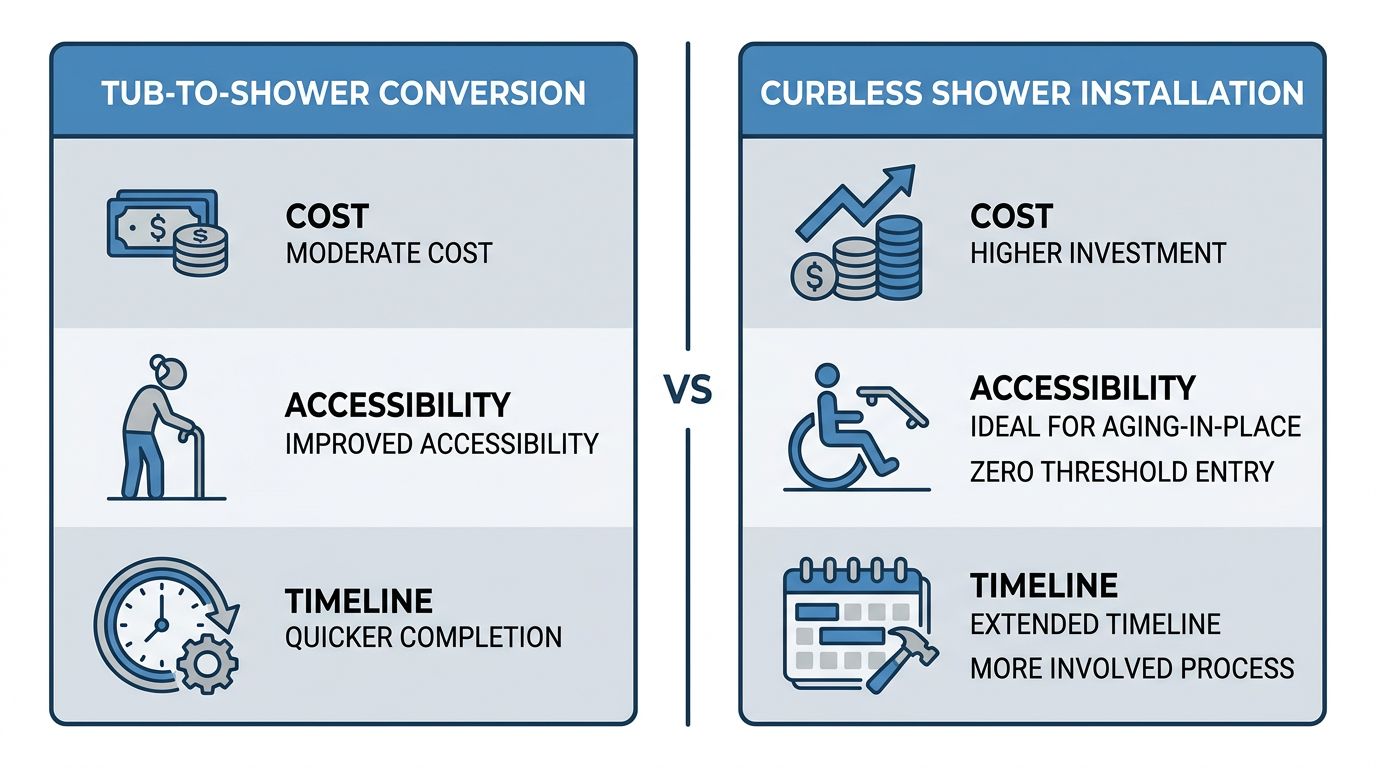
Shower conversion cost and design comparison
It is important to note that all estimates are preliminary and subject to change after site inspection and a full scope review. Project outcomes and timelines may vary based on site conditions, permitting, material availability, and unforeseen issues. We encourage you to request a custom quote for an accurate price tailored to your home. Let us help you get your project started—contact ACN Construction today for a detailed, no-obligation assessment.
Key Design and Material Choices for Your Walk-In Shower
Now that you understand the benefits of a walk-in shower, let’s explore the key design and material choices that will shape your project. When planning your walk-in shower conversion cost is a significant consideration, and your design decisions play a major role. We at ACN Construction guide you through the essential elements, from waterproof flooring to fixture selection, ensuring you make informed choices that balance style, safety, and budget.
Choosing the Right Waterproof Flooring for Your Walk-In Shower
For the best flooring for walk in showers, consider porcelain tile, luxury vinyl tile (LVT), or natural stone — each offers distinct advantages in durability and water resistance. Porcelain tile is an excellent choice, being very hard, scratch-resistant, and virtually impervious to water when glazed. This makes it a top contender for wet areas. Luxury vinyl tile, or LVT, presents a good alternative with high moisture resistance and waterproof core options, offering comfort underfoot. Natural stone delivers very high natural durability, but its water resistance is variable and typically requires regular sealing to prevent staining and water damage, adding a layer of maintenance.
These materials differ significantly in cost and upkeep. The following table provides a helpful reference point, summarizing approximate cost ranges estimated from industry data by the National Association of Home Builders and insights from local Denver-area suppliers.
| Flooring Type | Durability | Water Resistance |
|---|---|---|
| Porcelain Tile | Excellent; very hard and scratch-resistant | Very high; impervious when glazed |
| Luxury Vinyl Tile (LVT) | Good; resists moisture and wear | High; waterproof core options available |
| Natural Stone | Very high; natural durability | Variable; requires sealing and maintenance |
It is important to remember that these are preliminary estimates, and the final cost of your project can change after a detailed site inspection and full scope review. This comparison illustrates the trade-offs between initial cost, long-term maintenance, and performance. For example, while natural stone can be a more significant upfront investment, a well-maintained porcelain floor can provide decades of worry-free service.
Curbless vs. Curbed Shower Designs: Pros and Cons
The choice between a curbless, or zero-threshold, entry and a traditional curbed shower is a pivotal design decision. A curbless shower installation is a hallmark of modern, accessible design. We often recommend this option for an aging-in-place tub-to-shower conversion, as it eliminates the step-over barrier, allowing for seamless, wheelchair-friendly entry. However, this design demands a properly sloped floor for effective drainage, which can require lowering the shower pan into the subfloor, increasing structural and installation complexity and, consequently, the overall project cost.
A curbed shower, on the other hand, is a more traditional and generally simpler configuration to install. The raised threshold contains water effectively and typically involves fewer structural modifications to the existing floor. While it provides a classic look and reliable water containment, the step can be a tripping hazard and is not ideal for any household members with limited mobility. We can help you weigh these functional and cost considerations against your long-term needs to determine the best fit for your home.
Selecting Fixtures and Finishes That Match Your Home
Selecting the right fixtures and finishes is where your personal style meets essential function. We advise clients to think of the shower as a cohesive part of the home’s overall design. The tile style, from large-format porcelain to classic subway or mosaic, sets the visual tone. Beyond aesthetics, your choices for showerheads and valves shape your daily experience.
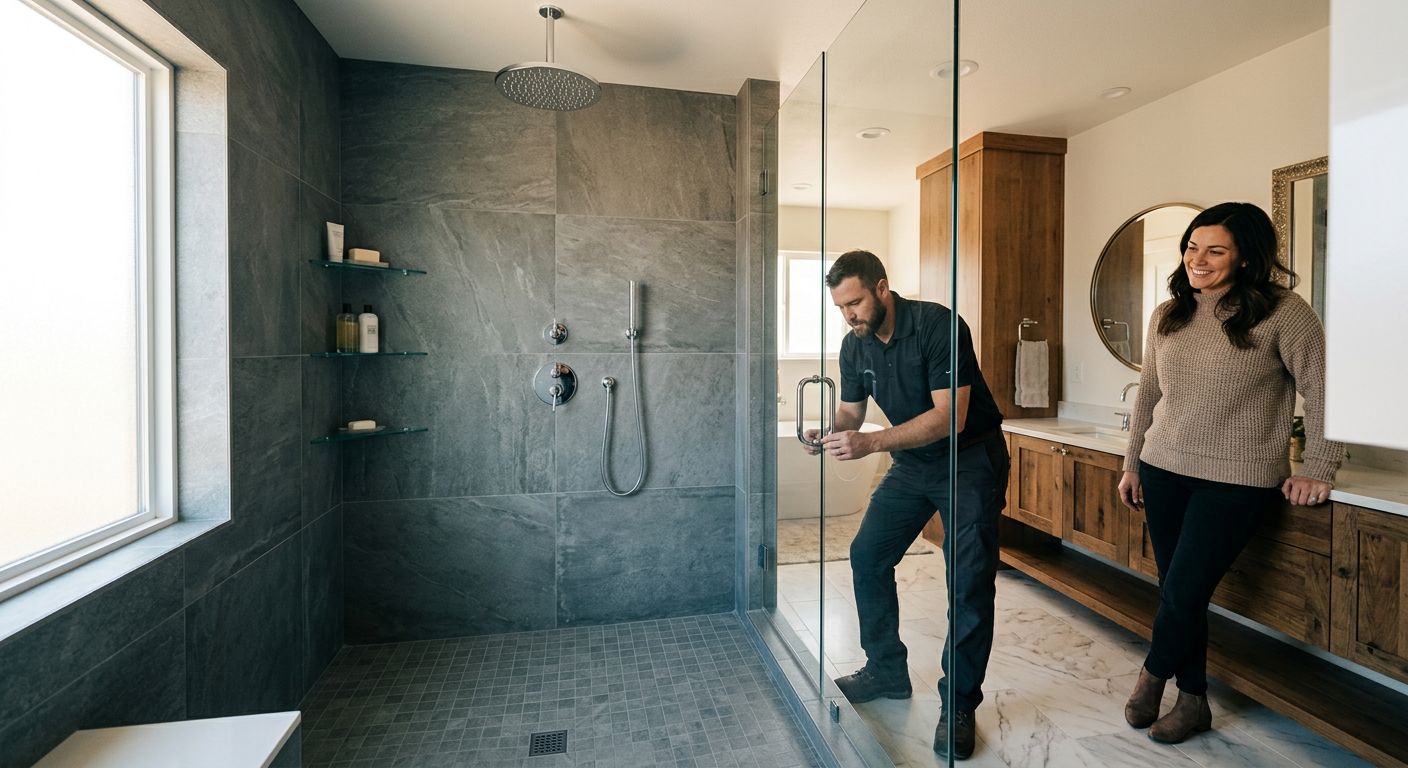
We can guide you toward low-flow showerheads that conserve water without sacrificing pressure, aligning with both environmental values and household budgets. For safety and comfort, thoughtfully chosen grab bars can be integrated into the design, providing stability while looking like an intentional, stylish element rather than a medical necessity. Whether you prefer the sleek look of a modern rain showerhead or a more traditional handheld fixture, we ensure all components work in harmony, resulting in a beautiful, durable, and safe personal retreat. Our design-build team provides single-point accountability, ensuring every detail is expertly managed.
After selecting your materials and design, the next step is planning the installation. This is where our local expertise in Centennial and Denver-area permitting and code ensures a smooth process from concept to completion. Please note that permit, inspection, and fee requirements vary by jurisdiction, and we recommend consulting with us for definitive advice on your specific project.
The Walk-In Shower Conversion Process: Permits, Steps, and Timelines
Now let’s walk through the actual conversion process—from permits to completion. Understanding the walk-in shower conversion cost involves more than just materials; permits, timelines, and the expertise of your team all factor into the final investment. This overview is based on our local practice and is not a substitute for professional legal or permitting advice.
Understanding Denver’s Permit Requirements for Walk-In Showers
Navigating local regulations is the critical first step for a tub-to-shower conversion in Denver. A building permit is typically required when the project involves altering plumbing, drainage, or structural elements, such as moving walls or changing the floor slope to accommodate a new shower base. Our team manages this entire process for you, ensuring compliance with the Colorado State Plumbing Code, which mandates a rough-in inspection of the new plumbing before the walls are closed, followed by a final inspection once all fixtures are installed and functional. If your project includes a curbless shower installation for enhanced accessibility, adherence to specific slope and drainage guidelines is also verified during these checks. According to ACN Construction’s project guidance, understanding these triggers helps avoid delays, and we always recommend verifying contractor licensure with the Colorado Department of Regulatory Agencies (DORA) for your peace of mind.
Step-by-Step Walk-In Shower Conversion Timeline
A professionally managed shower conversion follows a clear, phased timeline, completing in a fraction of the time a DIY project might require. While a walk-in shower conversion cost is influenced by the project’s duration, our design-build approach provides a predictable schedule of typically 5 to 8 days with a dedicated crew. Here is our standard process:
- Initial Design Consultation (1–2 Days): We finalize material selections, layout, and accessibility features for your new shower.
- Demolition and Preparation (1 Day): The old tub and surround are carefully removed, and the space is prepped for new plumbing.
- Plumbing Rough-In (1 Day): We relocate the drain to the center for a proper shower slope and install new supply lines and a mixing valve, after which a rough-in inspection is scheduled.
- Waterproofing (1 Day): A critical step, we apply a waterproof membrane to all surfaces to protect your home from moisture damage.
- Tile Installation (2–3 Days): Your chosen wall and floor tile are meticulously set, and grout is applied, transforming the space.
- Fixture Mounting (1 Day): Showerheads, controls, glass doors, and any accessories are installed.
- Final Inspection (1 Day): An inspector from the local authority confirms the work meets all safety and code standards.
By contrast, a DIY approach may take 2 to 6 weeks and carries a higher risk of delays from permit errors or material ordering mistakes, as highlighted by common home renovation challenges discussed in our internal knowledge base. Project outcomes and timelines may vary based on site conditions, permitting, material availability, and unforeseen issues.
Why Choose a Design-Build Team for Your Conversion?
Choosing a design-build team for walk in shower renovation services streamlines the entire process and provides single-point accountability. Instead of juggling separate contractors, designers, and suppliers, you have one coordinated team managing every detail from concept to completion. We handle all permits, coordinate with inspectors, and can often secure faster approvals through established relationships with local authorities, simplifying the regulatory process. This integrated method not only reduces stress but also ensures a cohesive design, as your selections are guided by the same professionals who will execute the build. Furthermore, our commitment to quality is backed by a 5-year workmanship warranty, a level of coverage simply not available with a DIY approach. For a detailed, fixed-price quote tailored to your home, please contact us for a site consultation.
Estimates are preliminary and subject to change after a site inspection and full scope review. Please consult a licensed contractor for definitive advice; verify licensure with the Colorado Department of Regulatory Agencies (DORA).
The table clearly illustrates the trade-offs between lower upfront expenses and the long-term value of professional accountability. A DIY conversion may seem appealing for its initial cost savings, but the potential for expensive errors and the lack of any labor warranty present significant financial risks. With our design-build service, you invest in a streamlined process, a dedicated team managing every hurdle, and a 5-year workmanship warranty that protects your bathroom for the long haul.
Understanding the timeline and team approach helps you plan your budget and schedule. For a detailed estimate, contact us for a site consultation. Request a Quote today, and let us help you get your project started.
How a Walk-In Shower Conversion Can Boost Your Home’s Resale Value
For many homeowners looking to maximize their property’s appeal, evaluating the walk-in shower conversion cost is a logical first step in understanding the potential return on investment. According to the National Association of the Remodeling Industry (NARI), mid-range bathroom remodels typically recoup 60 to 70 percent of their cost at resale. While actual returns depend on local market conditions in the Centennial area and the quality of installation, these industry benchmarks show that a well-executed tub-to-shower conversion can be a financially sound decision. This investment often pays dividends by making a bathroom appear larger and more modern, a key selling point in competitive markets.
The National Association of Home Builders (NAHB) reports growing demand for universal-design features like curbless shower installation and grab-bar-ready designs. These accessibility upgrades appeal to aging-in-place buyers and families seeking low-maintenance, spa-like bathrooms. In fact, NAHB research highlights that open, accessible layouts are increasingly sought after by both first-time buyers and those planning to age in place. Our design-build team at ACN Construction can integrate features such as built-in benches and handheld showerheads that further elevate the spa-like wellness sanctuary feel.
Beyond financial returns, removing a tub for a walk-in shower frees up floor space and improves safety, which can justify a premium in certain buyer segments. By eliminating the high step-over of a traditional tub, curbless designs reduce fall risks and improve accessibility, making the bathroom safer for everyone. However, as market conditions evolve, future remodeling trends—such as those discussed in our FAQ on home renovation challenges 2026—may influence the ROI. That’s why many homeowners see this renovation as a smart investment before selling. Let us help you get your project started. Request a Quote from ACN Construction today.
Frequently Asked Questions About Walk-In Shower Conversions
Now, let us answer some frequently asked questions about the process and costs. Get the details below.
- What does a walk-in shower conversion cost? A walk-in shower conversion cost varies by project scope and materials. Our team of home renovation contractors provides custom estimates after reviewing your space. Learn more about planning your budget.
- How does a tub-to-shower conversion work? A tub-to-shower conversion follows a clear path: design consultation, demolition, construction, and inspection. We handle permits and code compliance through our Design Build service. See the full process.
- What is a curbless shower installation? A curbless shower installation improves safety and accessibility by eliminating the step-over threshold. Proper floor slope and drainage are essential to meet local codes. Explore the requirements.
Estimates are preliminary and subject to change after site inspection and a full scope review. Permitting and fee requirements vary by jurisdiction. Let us help you get your project started. Request a Quote or Call Us 24/7.
Start Your Walk-In Shower Conversion Journey with ACN Construction
If you’re researching the walk-in shower conversion cost in Centennial, look no further than ACN Construction. As a full-service design-build remodeling company, we offer single-point accountability for tub-to-shower conversions and curbless shower installations. Our team navigates local permits and code requirements, ensuring a smooth process from concept to completion. Let us help you get your project started. Request a Quote today. Please note that all estimates are preliminary and subject to change after a thorough site inspection and full scope review.
Resources
- Find Trusted ACN Construction Home Renovation Contractors
- Get Essential Tips for Hiring Reliable Home Renovation Contractors
- Navigate 2026 Home Renovation Material Cost and Supply Disruptions
- Learn How Home Age Impacts Whole-Home Remodel Costs in Colorado
- Discover LP SmartSide Siding Advantages Over Fiber Cement
- Compare Fiberglass vs Vinyl Windows for Energy Efficiency in Colorado
- Discover Cost Per Square Foot for Home Remodeling in Colorado
- Discover Colorado DORA Licensing and Consumer Protection Resources
- Discover NARI Professional Remodeling Association and Certifications
- Discover NAHB Resources for Home Builders and Industry News
- Discover Colorado Association of Home Builders Resources
- Learn About NARI Local Chapters and Member Benefits